Email inboxes are more crowded and more dangerous than ever. Customers are constantly asked to decide which messages they can trust, while attackers work to impersonate well-known brands with increasingly convincing emails. In this environment, recognition and authenticity are just as important as content.
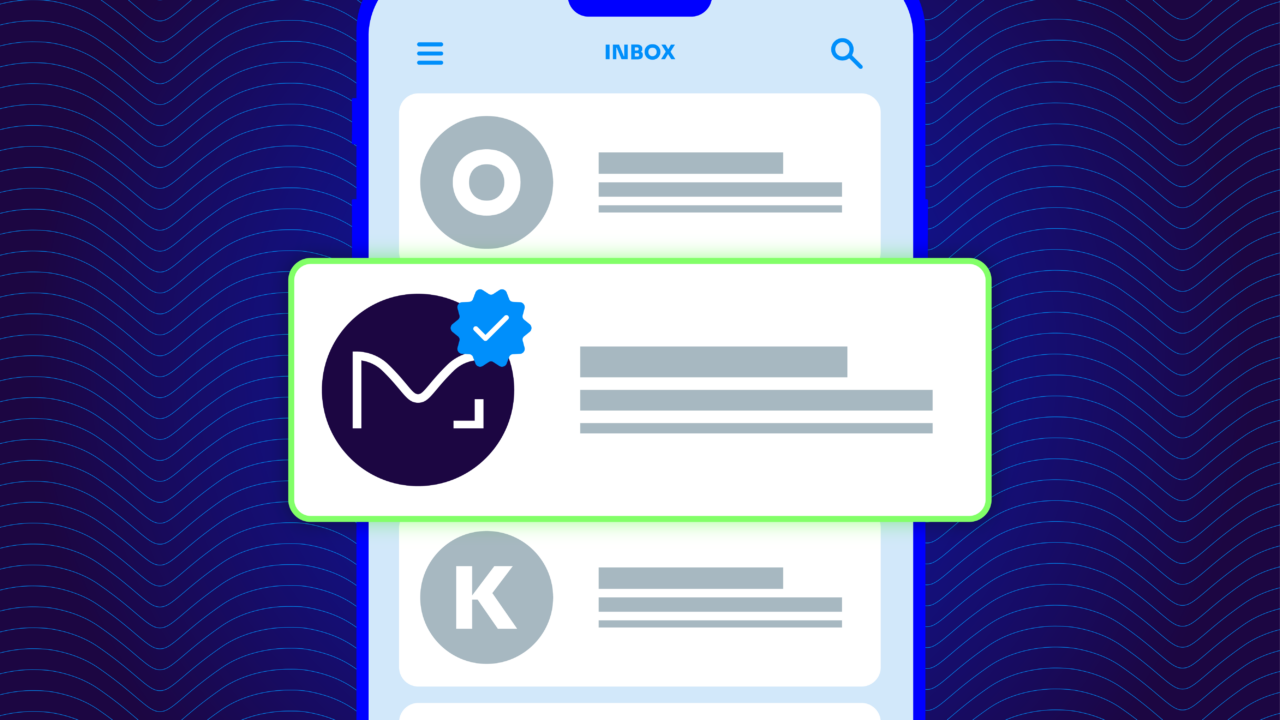
Brand Indicators for Message Identification, or BIMI, introduces a new way to build trust directly in the inbox. By displaying a verified company logo next to authenticated emails, BIMI gives recipients an immediate visual signal that a message is legitimate. This helps brands stand out, improves engagement, and reduces the success of impersonation attacks.
BIMI is not just a marketing feature. It is built on strong authentication and enforcement standards that ensure only legitimate senders can use a brand’s identity. For organizations that want to protect their brand, improve deliverability, and increase customer trust, BIMI represents a powerful extension of modern email security.
What BIMI is and how it works
BIMI stands for Brand Indicators for Message Identification. It is an email standard that allows organizations to display their official brand logo next to messages in supported inboxes. This logo appears alongside the sender name, making it easier for recipients to recognize and trust legitimate email.
BIMI works by linking a verified brand logo to an authenticated sending domain. When an email is received, the mailbox provider checks whether the message passes authentication and whether the sending domain is authorized to display a logo. If those conditions are met, the provider retrieves the logo and displays it in the inbox.

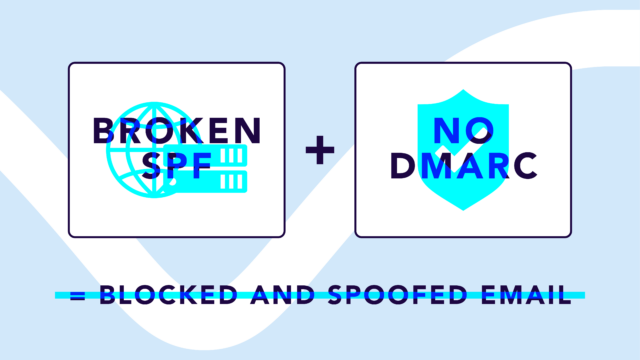
To qualify for BIMI, a domain must meet strict identity requirements. The email must pass SPF and DKIM authentication, and the domain must have an enforced DMARC policy in place. This ensures that only authorized senders can display a brand’s logo, preventing attackers from abusing visual identity.
BIMI does not change how email is delivered. Instead, it adds a visual layer of trust on top of existing authentication. For recipients, this creates a clearer signal of legitimacy. For brands, it provides a way to extend identity protection directly into the inbox experience.
Why BIMI requires DMARC enforcement
BIMI is built on the principle that visual brand trust must be backed by strong authentication. This is why DMARC enforcement is a mandatory requirement for displaying logos in the inbox. Without DMARC, mailbox providers cannot be confident that a message truly comes from the brand it claims to represent.
DMARC ensures that the domain visible to the recipient aligns with the domain that has been authenticated through SPF or DKIM. When a domain enforces DMARC with a quarantine or reject policy, unauthenticated messages are blocked before they reach the inbox. This eliminates the ability for attackers to impersonate a brand using lookalike or misaligned domains.
Mailbox providers only display BIMI logos for domains that have demonstrated this level of control over their email identity. Monitoring mode is not enough. Enforcement proves that a brand actively protects its domain and prevents unauthorized use.
By tying BIMI eligibility to DMARC enforcement, mailbox providers ensure that logos become a signal of verified identity rather than a cosmetic feature. This protects recipients from deception and ensures that brands maintain exclusive control over how their identity appears in the inbox.
How BIMI protects brand identity
BIMI protects brand identity by ensuring that only authenticated and authorized email can display a company’s logo in the inbox. This prevents attackers from visually impersonating trusted brands, which is one of the most effective techniques used in modern phishing campaigns.
Without BIMI, recipients rely on sender names and email addresses that can be easily mimicked. With BIMI in place, the presence of a verified logo becomes a clear indicator that the message passed authentication checks and came from a legitimate source. Fraudulent messages, even if they look convincing, cannot display the brand’s visual identity.
This creates a strong deterrent against impersonation. Attackers lose the ability to exploit brand recognition to trick recipients into clicking links, sharing credentials, or approving payments. Over time, customers learn to associate the logo with legitimate communication, making it easier to spot suspicious messages that lack this signal.
By extending authentication into the visual layer of the inbox, BIMI helps brands maintain control over how their identity is presented and reinforces trust in every legitimate message they send.
The marketing benefits of BIMI
BIMI is not only a security feature. It also delivers measurable benefits for marketing and customer engagement by making trusted brands more visible in the inbox.
When a verified logo appears next to an email, it immediately draws attention. Recipients can quickly recognize the sender, which increases confidence and reduces hesitation. Studies have shown that this visual trust signal can increase open rates by up to ten percent, especially for well-known brands with strong visual identities.
BIMI also improves consistency across email campaigns. Newsletters, promotions, and transactional messages all reinforce the same brand presence, helping organizations stand out in crowded inboxes. This is particularly valuable as inbox providers continue to reduce the impact of subject line tactics and other traditional engagement strategies.
By strengthening recognition and trust at the point of inbox decision making, BIMI complements deliverability efforts and helps marketing teams get more value from the email programs they already run.
BIMI as a trust signal for customers
For recipients, trust decisions are made in seconds. Before an email is opened, users quickly scan the sender name, subject line, and any visual cues that indicate legitimacy. BIMI adds a powerful trust signal at this exact moment by showing a verified brand logo directly in the inbox.
As phishing attacks become more sophisticated, users can no longer rely on obvious warning signs. Fraudulent messages often look polished and professional. BIMI helps cut through this uncertainty by reinforcing which messages are genuinely associated with a brand.
This consistency plays an important role in customer confidence. Emails that display a trusted logo feel more official and credible, while messages that lack it are easier to question. Over time, BIMI helps educate recipients to recognize legitimate communication and reduces the likelihood that they will engage with impersonation attempts.
By combining authentication with a clear visual marker, BIMI turns brand identity into an active defense mechanism rather than a passive asset.
What is required to implement BIMI
Implementing BIMI requires meeting a set of technical and brand validation prerequisites designed to ensure that only legitimate senders can display a logo in the inbox.
The first requirement is full DMARC enforcement. A domain must have DMARC in place with a policy set to quarantine or reject. Monitoring mode is not sufficient because it does not actively block unauthenticated email.
The sending domain must also pass SPF and DKIM authentication with proper alignment. This ensures that the domain shown to recipients matches the domain that has been authenticated by mailbox providers.
In addition to authentication, organizations must prepare a compliant logo file. BIMI logos must meet specific format and hosting requirements and be publicly accessible. Some mailbox providers also require a verified mark certificate to confirm brand ownership and prevent logo misuse.
These requirements can be challenging to manage, especially for organizations with complex email ecosystems or multiple sending domains. Without careful coordination, misconfigurations can delay BIMI adoption or prevent logos from displaying correctly.
How Valimail simplifies BIMI adoption
Achieving BIMI requires more than uploading a logo. It depends on strong authentication, consistent alignment, and ongoing enforcement across every system that sends email on behalf of a brand. Managing this manually is difficult, especially as email infrastructure changes over time.
Valimail helps organizations reach BIMI readiness by first establishing and enforcing DMARC across all sending domains. The platform automatically discovers every legitimate sender, ensures SPF and DKIM are properly aligned, and prevents unauthorized sources from using the domain.
As new vendors or platforms are added, Valimail updates authentication configurations in real time. This prevents drift that could break DMARC enforcement and cause BIMI logos to disappear. Teams gain continuous visibility into sender identity and compliance without having to manage complex DNS changes manually.
By automating identity management and enforcement, Valimail removes the operational friction from BIMI adoption. Security teams maintain control and protection, while marketing teams unlock the brand and engagement benefits of logos in the inbox.
Security and brand teams working together
BIMI sits at the intersection of security, brand, and marketing, which means successful adoption requires collaboration across teams. Security teams are responsible for authentication, DMARC enforcement, and protection against spoofing. Brand and marketing teams focus on visual identity, customer trust, and engagement.
If security teams enforce DMARC without brand involvement, the opportunity to extend trust visually into the inbox can be missed. If marketing teams push for logos without proper authentication, BIMI will not be supported by mailbox providers. Both sides must work from the same understanding of sender identity and domain control.
When these teams collaborate, BIMI becomes more than a logo feature. It becomes a shared trust signal that reinforces brand integrity and reduces risk. Security gains stronger protection against impersonation, while marketing gains higher visibility and engagement in the inbox.
By treating email identity as a shared asset rather than a siloed responsibility, organizations can use BIMI to strengthen both brand protection and customer confidence at the same time.
Learn more about BIMI
BIMI represents a new chapter in email trust where brand identity, security, and deliverability come together in the inbox. By displaying a verified logo next to authenticated messages, BIMI helps recipients instantly recognize legitimate communication and makes it harder for attackers to impersonate trusted brands.
This visual trust signal is only possible because BIMI is built on strong foundations. DMARC enforcement, SPF, and DKIM ensure that only authorized senders can use a brand’s identity. As a result, BIMI is not just a marketing enhancement. It is a brand protection mechanism that rewards organizations that take email authentication seriously.
For brands looking to stand out in crowded inboxes while reducing the risk of impersonation attacks, BIMI offers clear value. It increases recognition, boosts engagement, and reinforces trust at the exact moment recipients decide whether to open an email. With the right authentication strategy in place, BIMI turns email identity into a competitive and protective advantage.
FAQs About BIMI and brand protection
What is BIMI, and how does it protect brand identity?
BIMI is an email standard that displays a verified brand logo next to authenticated emails in supported inboxes. It protects brand identity by ensuring only legitimate, authenticated messages can display a company’s logo.
Does BIMI improve email security?
Yes. BIMI requires DMARC enforcement, which blocks unauthorized email from using a domain and reduces spoofing and phishing attacks.
Which inbox providers support BIMI?
BIMI is supported by several major mailbox providers, with adoption continuing to expand. Support depends on the provider and inbox environment.
Is DMARC required for BIMI?
Yes. Domains must enforce DMARC with a quarantine or reject policy. Monitoring mode does not qualify.
What kind of logo is required for BIMI?
BIMI logos must meet specific format and hosting requirements and be publicly accessible. Some providers require a verified mark certificate.
Can attackers display my logo if they spoof my domain?
No. BIMI ensures that only authenticated and authorized email can display a logo. Spoofed messages cannot use your brand identity.
Does BIMI increase open rates?
Many organizations see higher open rates due to increased recognition and trust, with some reporting improvements of up to ten percent.
Is BIMI a marketing feature or a security feature?
BIMI is both. It enhances brand visibility and engagement while relying on strong authentication to protect against impersonation.