Every legitimate email program depends on a simple promise: The message that reaches an inbox is really from the organization shown in the “From” line. When that promise breaks, customers learn to doubt what they see, and brand trust becomes harder to earn with every campaign. Spoofing, phishing, and lookalike domains take advantage of the gap between what an email claims and what it can prove, especially when security controls are inconsistently deployed across vendors, subdomains, and third-party senders.
Two standards help close that gap while also improving how people remember your brand in the inbox: DMARC and BIMI. DMARC gives mailbox providers a clear, automated way to decide whether a message is authorized to use a domain, and it provides reporting that shows who is sending on your behalf. BIMI builds on that verified foundation by enabling a brand indicator to appear alongside authenticated email, reinforcing recognition at the exact moment a recipient decides whether to engage.
Taken together, DMARC and BIMI do more than reduce fraud. They create consistent signals that help recipients connect legitimate messages with your identity over time. That consistency is what turns one successful campaign into repeat engagement and long-term recall, across inboxes.
How DMARC authentication establishes trust in email branding
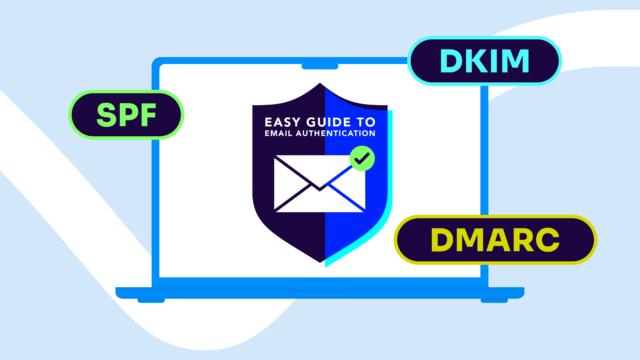
DMARC, which stands for Domain-based Message Authentication, Reporting, and Conformance, is designed to stop attackers from using your domain in unauthorized email. It does this by tying together SPF and DKIM, then adding an enforcement policy and reporting. For branding, the most important concept is alignment. Alignment means the domain that a recipient sees in the visible “From” address matches the domain that successfully authenticated via SPF and or DKIM. When alignment is present, the message has a provable relationship to the domain in the header. When alignment is missing, a message can appear to be from your organization while actually being sent from infrastructure you do not control.
DMARC lets domain owners publish a policy telling mailbox providers what to do when alignment fails. Policies range from monitoring only to quarantining suspicious messages to rejecting them outright. This is where trust begins to compound. If mailbox providers consistently see that mail from your domain passes authentication and aligns properly, your domain reputation is supported by evidence rather than assumption. That helps protect deliverability, but it also supports brand perception. Recipients experience fewer confusing “is this really you?” moments, and they are less likely to encounter impersonation attempts using your exact domain.
DMARC also includes reporting that provides visibility into real-world sending. Aggregate reports show which sources are sending mail claiming to be from your domain and how those messages perform against SPF, DKIM, and alignment. For organizations with multiple systems, marketing tools, and operational email streams, this visibility is essential. Without it, you can accidentally leave gaps where some legitimate messages fail authentication, or attackers find ways to exploit weak or unmonitored pathways.
From a branding standpoint, DMARC supports consistency. When your legitimate email streams are authenticated and aligned, recipients repeatedly see that messages from your brand arrive reliably, look consistent, and do not trigger warnings or land in spam. Consistency is what enables recognition. People remember patterns, and DMARC helps ensure the pattern recipients learn is the one you intend, not the one attackers try to create.
How BIMI uses verified authentication to display brand indicators
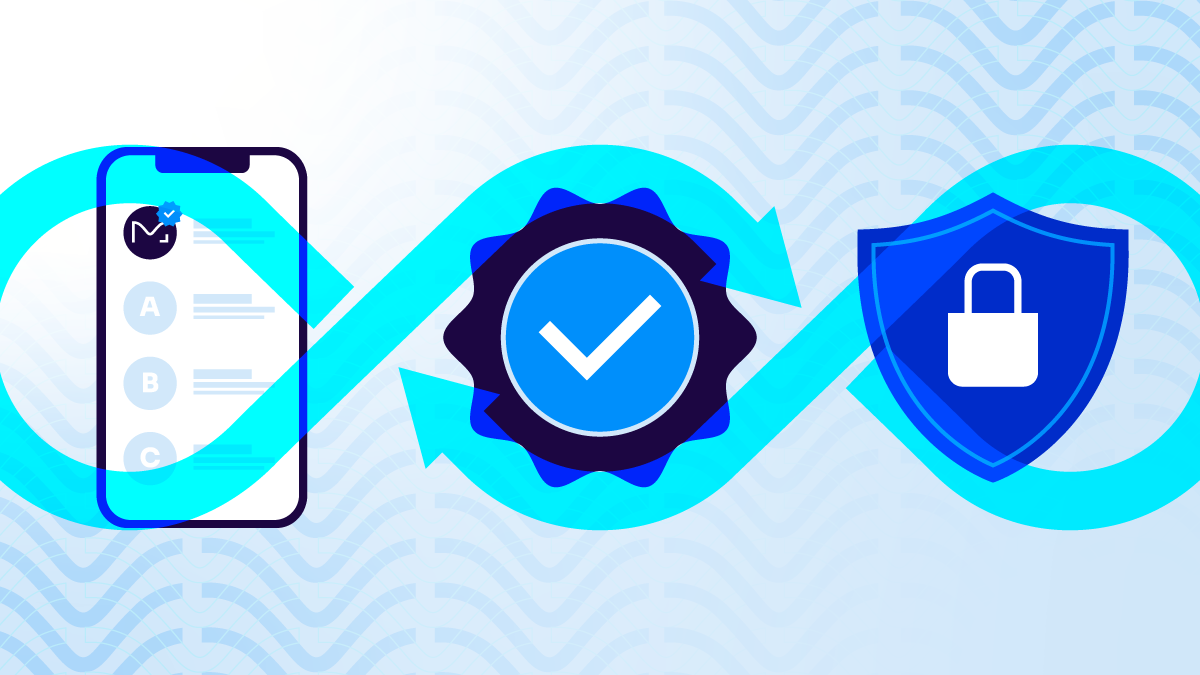
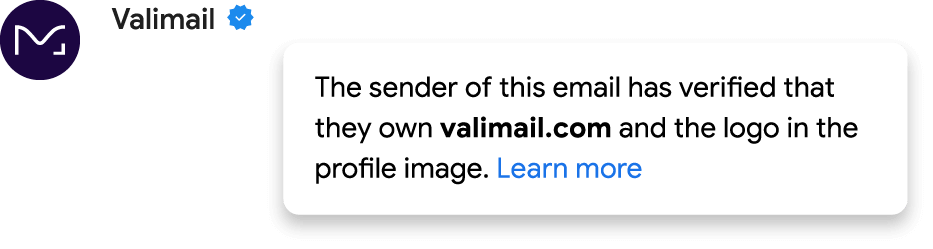
BIMI, which stands for Brand Indicators for Message Identification, is a standard that allows participating mailbox providers to display a brand-controlled visual indicator in the inbox, often near the sender name. While the exact inbox placement can vary by provider and user interface, the core idea is straightforward: When an email is strongly authenticated and meets certain requirements, the recipient may see a verified brand mark that makes it easier to recognize legitimate messages.

The key is that BIMI is not simply a logo upload. It is designed to be conditional on authentication, which is why it is closely tied to DMARC. BIMI works by letting a domain publish a DNS record pointing to a hosted brand mark file and, in many implementations, evidence that the mark has been validated. Mailbox providers then decide whether to display the indicator based on their support for BIMI and their evaluation of the message and domain.
This “earned display” model matters for recall because it reinforces recognition without training users to trust arbitrary images. In the past, email clients avoided showing sender-controlled visuals because attackers could exploit them. BIMI’s requirement that mail be authenticated and aligned changes that equation. Recipients can see a consistent indicator on legitimate mail, while impersonators are less likely to qualify.
From a practical perspective, BIMI can help in three branding moments that occur millions of times across inboxes.
- First is scanning. Many people triage email quickly, relying on visual cues. A consistent indicator can reduce the cognitive load of figuring out which messages are genuine.
- Second is confidence. Even when people recognize a brand name, the modern inbox includes constant fraud attempts, and recipients may hesitate. A verified indicator can act as a reassurance signal that complements, rather than replaces, good subject lines and clear content.
- Third is reinforcement. Brand recall strengthens through repeated exposure, and the inbox is one of the few channels where customers repeatedly see your identity in a high-intent context, like account notices, receipts, and important updates.
BIMI also encourages better operational hygiene. To benefit from it, organizations must tighten authentication and align sending sources. That pushes email programs toward a more disciplined, measurable posture, which ultimately improves both security outcomes and the consistency that brand recall depends on.
Curious what BIMI will look like for your brand? Our BIMI Simulator helps you visualize your logo in the inbox and also gives you competitor insights.
How DMARC enforcement and BIMI requirements work together to reduce spoofing and improve recall
DMARC and BIMI reinforce each other because they address two different but connected problems: proving legitimacy and making legitimacy easy to recognize. DMARC is the control plane. It defines who is allowed to send on behalf of a domain and what mailbox providers should do when a message fails. BIMI is the presentation layer. It takes the outcome of that proof and, when conditions are met, translates it into a visible indicator that supports recognition.
The relationship starts with enforcement. A DMARC policy of none is useful for monitoring, but it does not stop spoofed messages from reaching inboxes. If attackers can still send mail that appears to be from your domain, recipients will continue to see fraudulent messages mixed with real ones, damaging trust and muddying your brand identity. Moving to quarantine and then rejecting is what shrinks the attacker’s reach. This is also where alignment discipline pays off. When legitimate streams are properly aligned, enforcement can be applied confidently without breaking business-critical email.
BIMI builds on that. Many mailbox providers that support BIMI expect DMARC to be enforced at quarantine or rejection. The reason is simple: A brand indicator should reflect a strong signal, not a weak claim. If your domain is only monitoring, mailbox providers have less assurance that spoofing is being actively blocked, so the incentive to display a verified indicator decreases. When you enforce DMARC, you reduce the amount of fraudulent mail that can coexist with legitimate mail under your domain identity, which makes the indicator more meaningful.
This has a direct connection to brand recall. Recall is not only about being noticed. It is about being recognized correctly. If recipients occasionally receive convincing fakes, they may start ignoring even real messages, or they may rely on unreliable cues. Strong DMARC enforcement reduces the number of contradictory experiences, and BIMI increases the number of reinforcing experiences. Over time, recipients build a stable mental model: messages from your domain look and authenticate in a consistent way.
Practically, organizations can use this pairing as a roadmap. Start by inventorying all legitimate sending sources, including marketing platforms, transactional mail systems, and third-party vendors. Ensure SPF and DKIM are configured correctly and aligned with the visible From domain. Use DMARC reporting to identify unknown senders and misconfigurations, then remediate. As alignment improves, move the DMARC policy toward enforcement in a measured way. Once enforcement is stable, publish BIMI records and validate that supported mailbox providers are able to display the indicator.
The result is a feedback loop that improves security and recognition simultaneously across inboxes: fewer successful spoofs, more consistent authentication outcomes, and a stronger, more memorable brand presence where it matters most.
Get brand recognition
DMARC and BIMI address a modern inbox reality: People do not have time to scrutinize every message, yet attackers depend on confusion and split-second decisions. DMARC reduces that confusion by giving mailbox providers a reliable way to verify whether a message is authorized to use your domain, then enforcing consequences when it is not. This protects recipients from direct domain spoofing and protects your organization from the reputational damage that comes with impersonation.
BIMI complements that security foundation by turning verified authentication into a visible brand cue. When supported by mailbox providers, it helps legitimate messages stand out during inbox scanning, reinforces recognition through repeated exposure, and strengthens the recipient’s confidence that the message is truly from the brand it claims to represent. The combined effect is both practical and measurable: fewer fraudulent messages reaching inboxes and a clearer, more consistent identity across email touchpoints.
If you want a structured way to gain visibility into your senders, move safely to DMARC enforcement, and prepare for BIMI as part of a unified email security program, speak to the team at Valimail today.
FAQs
What is the difference between SPF, DKIM, and DMARC, and why does alignment matter?
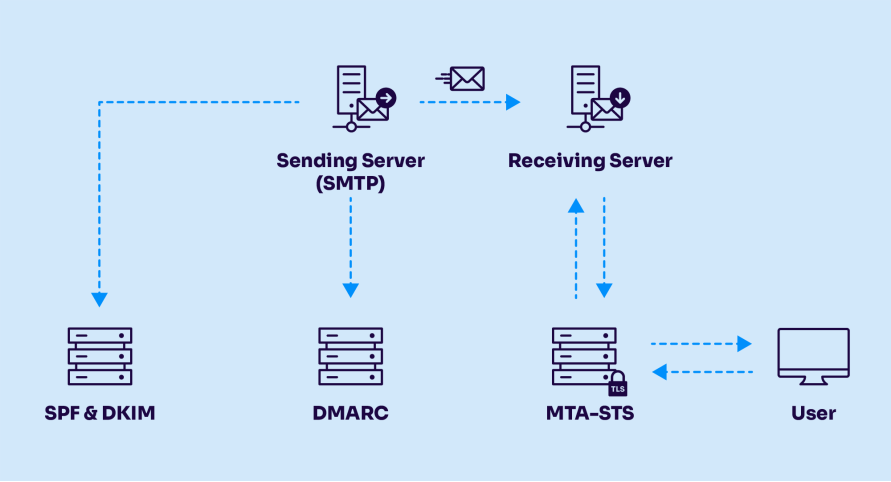
SPF and DKIM are authentication methods, while DMARC is a policy and reporting layer that builds on them. SPF checks whether a sending server is allowed to send for a domain by comparing the sender’s IP address to what is published in DNS. DKIM uses cryptographic signatures to prove that the message content was signed by a domain that controls a private key.
DMARC ties these together by checking alignment between the domain that authenticated and the domain shown in the visible From address. Alignment matters because recipients judge messages based on what they see. Without alignment, a message could pass SPF or DKIM for some other domain while still displaying your brand domain in the From line. DMARC makes that mismatch visible to mailbox providers and gives them instructions on how to handle it.
Does DMARC improve deliverability, or can it hurt it if configured incorrectly?
DMARC can improve deliverability over time because it reduces spoofing, stabilizes domain reputation, and encourages consistent authentication across all mail streams. However, it can hurt deliverability if you enforce quarantine or reject before you have properly aligned legitimate senders. The most common risk is blocking or diverting messages from systems you rely on, such as marketing platforms, customer support tools, and automated notification services, because they fail alignment.
A safe approach is to start with a monitoring policy and analyze DMARC aggregate reports to identify all legitimate sources. Then correct SPF and DKIM configurations, ensure the visible From domain aligns with authentication, and only then move gradually to enforcement. The goal is to ensure that enforcement blocks attackers, not your own business email.
Do you need DMARC enforcement to use BIMI effectively?
In most real-world implementations, yes. While BIMI is a separate standard, many mailbox providers that support BIMI expect the domain to have DMARC in place and to be enforcing at least quarantine, and often reject. This expectation exists to ensure the brand indicator reflects a strong authentication posture rather than a domain that is simply observing failures.
If spoofed mail can still reach inboxes using your domain, a visible indicator becomes less trustworthy as a signal. Enforced DMARC reduces the volume of fraudulent mail that could confuse recipients and helps make the indicator meaningful. In addition, the work needed to meet BIMI requirements usually overlaps with the work needed to achieve DMARC alignment, so treating enforcement as a prerequisite keeps the program coherent.
How do DMARC reports help identify risky senders and protect your brand?
DMARC reports provide visibility into who is sending email that claims to be from your domain and whether those messages pass SPF, DKIM, and alignment. Aggregate reports show patterns at scale, such as consistent authentication failures from a particular vendor, a forgotten legacy system still sending, or unauthorized sources attempting to spoof your domain.
This visibility helps you reduce risk in two ways. First, you can fix legitimate streams that are failing authentication before they affect deliverability or get blocked under enforcement. Second, you can detect and respond to abuse, including phishing campaigns, by seeing where unauthorized traffic is originating and how often it occurs. Over time, using reports to tighten alignment and enforce DMARC reduces brand impersonation that can erode trust.
If BIMI shows a logo, does that mean the email is safe to trust?
A BIMI-displayed indicator can be a helpful legitimacy cue, but it should not be treated as a blanket guarantee that a message is safe. BIMI generally indicates that the message met certain authentication and policy checks, which reduces the likelihood of straightforward domain spoofing. However, attackers can still use lookalike domains, compromised accounts, or social engineering techniques that do not require spoofing your exact domain.
Recipients should still evaluate the content, links, and requests inside the message. For senders, BIMI is best viewed as one part of an overall security and trust strategy, alongside strong authentication, careful control of third-party senders, consistent From domains, and clear user education. The value is in reducing impersonation and improving recognition, not eliminating all risk.
How long does it take to move from DMARC monitoring to enforcement and BIMI readiness?
Timelines vary based on how many systems send email for your domain and how complex the domain structure is. If you have only a few well-documented sending sources, moving from monitoring to quarantine and then reject can happen relatively quickly, sometimes in weeks. If you have many vendors, multiple subdomains, and legacy systems, it can take longer because you must identify, validate, and align each source without interrupting mail flow.
BIMI readiness typically comes after enforcement is stable, because you want consistent pass rates and strong alignment. The most time-consuming part is often inventory and remediation, not publishing the final DNS records. A measured approach that uses reports, staged policy changes, and continuous validation helps avoid disruptions while improving security and brand recall.