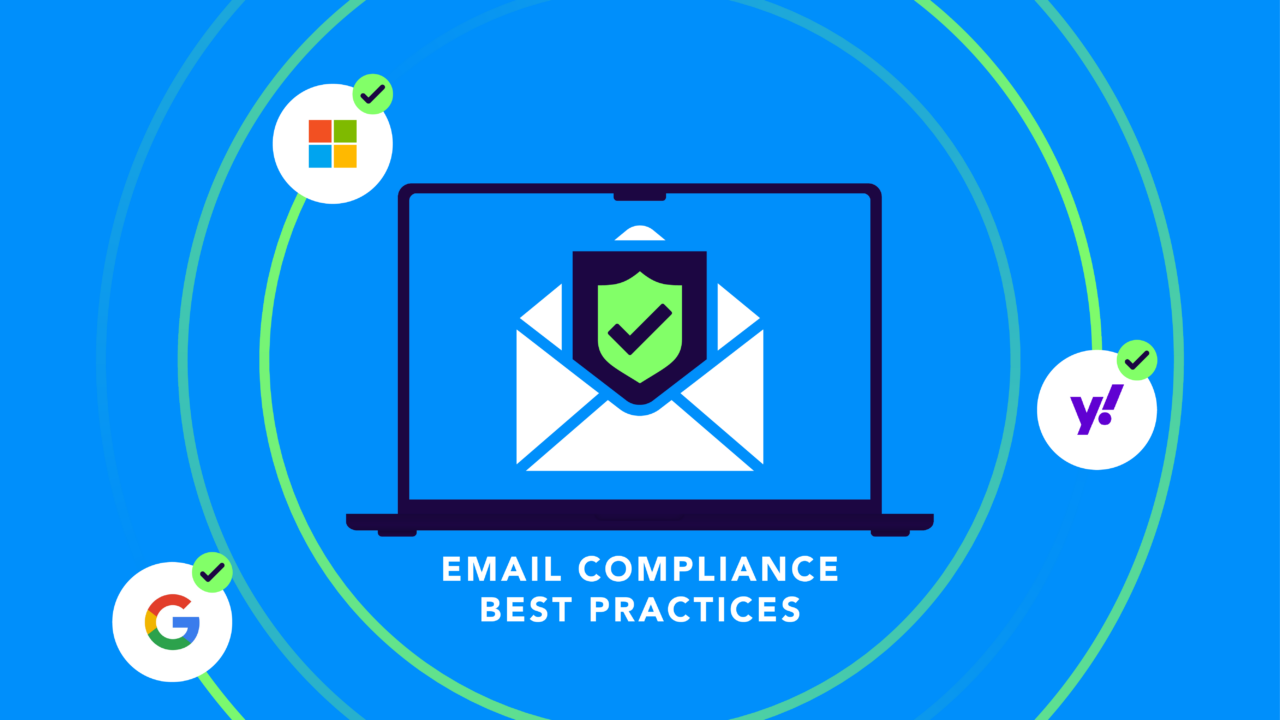
Email deliverability is no longer just a technical concern. It is now governed by strict compliance rules set by the world’s largest mailbox providers. Microsoft, Google, and Yahoo collectively control the majority of global inboxes, and their policies effectively determine which messages reach customers and which ones get blocked. For organizations that rely on email for marketing, customer communication, and operations, compliance with these requirements is now essential.
In response to rising phishing, spoofing, and large-scale abuse, these providers have introduced mandatory authentication and sender identity standards. Bulk senders must prove who they are, how they are authorized to send, and how recipients can opt out. Messages that do not meet these standards are increasingly filtered, throttled, or rejected outright, even if they come from legitimate brands.
This shift marks a move from optional best practices to enforced identity-based trust. Understanding and meeting the email compliance requirements of Microsoft, Google, and Yahoo is now critical for protecting deliverability, maintaining sender reputation, and ensuring that important communications reach their intended audience.
What triggered the new compliance rules
The tightening of email compliance standards by Microsoft, Google, and Yahoo is a direct response to the rapid growth of phishing, spoofing, and large-scale abuse. Attackers increasingly impersonate trusted brands, executives, and partners to steal credentials, redirect payments, or spread malware. These attacks rely on unauthenticated or misaligned domains that make fraudulent messages appear legitimate.
Mailbox providers are under constant pressure to protect users while preserving email as a reliable communication channel. This has pushed them to adopt identity-based controls that verify who is allowed to send email for a given domain. By requiring authentication and alignment, they can block abusive senders at the protocol level rather than reacting after harm is done.
Bulk senders and marketing platforms are especially affected because they generate high volumes of mail and often use multiple vendors and sending domains. Without clear authentication, this complexity creates blind spots that attackers exploit. The new compliance rules force senders to bring order and accountability to their email ecosystems.
Core requirements across Microsoft, Google, and Yahoo
While each mailbox provider enforces compliance differently, they align on a shared set of requirements that define what it means to be a trusted sender.
All sending domains must publish SPF records that identify which servers are authorized to send email on their behalf. Every message must be signed with DKIM so receiving systems can verify message integrity and domain ownership. Domains must implement DMARC so the visible From address aligns with the authenticated sending domain and mailbox providers know how to handle failures.
Bulk and marketing messages must include a visible and functional one-click unsubscribe option so recipients can opt out easily. Senders must also maintain consistent From addresses and sending domains to avoid confusion and impersonation. Spam complaint rates and list hygiene are monitored closely and poor behavior quickly reduces sender reputation.
These controls create a clear identity and accountability framework. Domains that meet these standards earn inbox trust. Those that do not face filtering, throttling, and blocking.
How Google, Microsoft, and Yahoo enforce email compliance
Google, Microsoft, and Yahoo require all high-volume senders to authenticate their domains with SPF and DKIM and to publish a DMARC policy. Messages that fail authentication or show misalignment between the visible From domain and the authenticated domain are far more likely to be filtered or rejected.
For marketing emails, both providers require a one-click unsubscribe mechanism that is easy for recipients to use. This reduces spam complaints and helps protect inbox quality. Domains that fail to provide this option risk losing inbox placement.
Both providers also track complaint rates, bounce rates, and engagement. High levels of abuse or poor list hygiene degrade reputation and lead to reduced delivery or blocking. Authentication, DMARC, and user-friendly opt-out options work together to establish whether a sender is trustworthy.
What happens when you are not compliant
When domains fail to meet Microsoft, Google, and Yahoo requirements, email delivery is directly affected. Messages may be throttled, diverted to spam folders, or rejected outright. Even well-known brands experience delivery failures when authentication and alignment are missing.
Over time, repeated failures damage the domain’s reputation. This makes it harder for legitimate messages to reach the inbox, even after technical issues are fixed. Recovery can take months and can disrupt marketing, billing, and customer communications.
Non-compliance also erodes customer trust. Important notifications may not arrive, promotions lose reach, and support teams face increased confusion and complaints. Staying compliant is far less costly than repairing a reputation after it has been lost.
Why DMARC is the foundation of compliance
SPF and DKIM confirm that the email is coming from an authorized source, but DMARC turns that authentication into an enforceable policy. It ensures that the domain that users see matches the domain that was authenticated and tells mailbox providers how to handle failures.
Without DMARC, attackers can still impersonate brands even if SPF and DKIM are in place. DMARC prevents this by requiring alignment and allowing mailbox providers to block unauthenticated messages.
Providers now expect domains to move beyond monitoring mode. Enforcement through quarantine or reject policies is required for full compliance. DMARC is the mechanism that allows Microsoft, Google, and Yahoo to protect users while giving legitimate senders a clear path to inbox trust.
See your DMARC status in real-time for free:
Check your
domain now
Enter your domain to see if it’s vulnerable to spoofing or if others are sending emails on your behalf. Instantly check your DMARC, SPF, and BIMI status with a detailed security report.
You’re not fully protected, learn more here.
Check your
domain now
Enter your domain to see if it’s vulnerable to spoofing or if others are sending emails on your behalf. Instantly check your DMARC, SPF, and BIMI status with a detailed security report.
You’re not fully protected, learn more here.
Check your
domain now
Enter your domain to see if it’s vulnerable to spoofing or if others are sending emails on your behalf. Instantly check your DMARC, SPF, and BIMI status with a detailed security report.
You’re not fully protected, learn more here.
Your Domain
Not protected AGAINST IMPERSONATION ATTACKS
DMARC NOT AT ENFORCEMENT
exampledomain1.com
Authentication Status for January 10, 2025
DMARC at Enforcement
SPF Record Configured
BIMI Ready
exampledomain1.com
Authentication Status for January 10, 2025
DMARC at Enforcement
SPF Record Configured
BIMI Ready
How marketing and IT teams must work together
Email compliance depends on coordination between marketing and IT. Marketing teams manage the platforms that send email. IT teams control the domains and DNS records that govern authentication. When these teams are not aligned, misconfigurations and compliance failures are inevitable.
New vendors can go live without proper authentication. DNS changes can break DKIM. Old platforms may continue sending without authorization. Each gap creates risk and can cause messages to be blocked.
Shared visibility into SPF, DKIM, and DMARC allows both teams to work from the same identity framework. This collaboration ensures that growth and security support each other instead of creating conflict.
How Valimail simplifies provider compliance
Managing email compliance manually is difficult, especially when organizations use many vendors and platforms. Each sender must be discovered, authenticated, and kept in alignment over time.
Valimail provides a cloud native platform that automatically discovers every service sending on behalf of your domains. It configures and maintains SPF, DKIM, and DMARC so that all legitimate sources remain authenticated and aligned with provider requirements.
As sending patterns change, Valimail updates configurations in real time and prevents drift that would otherwise lead to compliance failures. Reporting maps directly to the standards enforced by Microsoft, Google, and Yahoo, so teams always know where they stand.
Learn more about email compliance
Microsoft, Google, and Yahoo now define the rules of email deliverability. Authentication, identity, and user protection are no longer optional. They are mandatory for reaching the inbox.
SPF, DKIM, DMARC, and one-click unsubscribe form the foundation of modern compliance. Together, they create a system of accountability that protects users and rewards responsible senders.
By adopting a compliance-first approach and using automated identity management, organizations can protect their reputation, improve deliverability, and maintain reliable communication with customers. Aligning with these providers is now required to do business via email.
FAQs about email compliance with Microsoft, Google, and Yahoo
What are the email compliance requirements for Microsoft, Google, and Yahoo?
All three providers require SPF and DKIM authentication, DMARC alignment, and for bulk senders a functional one click unsubscribe. They also monitor complaint rates and list hygiene.
Who is considered a bulk sender?
Any domain or service that sends high volumes of email, especially marketing or promotional messages. Most organizations running automated email programs fall into this category.
Is DMARC mandatory for Google and Yahoo?
Yes. Bulk senders must have a DMARC policy in place. Domains without DMARC or with misalignment face filtering or rejection.
Does Microsoft require DMARC?
Microsoft strongly relies on DMARC as a trust signal. Domains without it are more likely to experience filtering and blocking.
What happens if SPF or DKIM fails?
If authentication fails or does not align with the From domain, DMARC fails. Messages are more likely to be quarantined or rejected.
Does this affect transactional email?
Yes. Authentication and DMARC apply to all email, including invoices, alerts, and account notifications.
How can organizations stay compliant as they grow?
As new vendors are added, authentication must be updated continuously. Automated platforms like Valimail ensure all senders stay aligned with provider requirements.