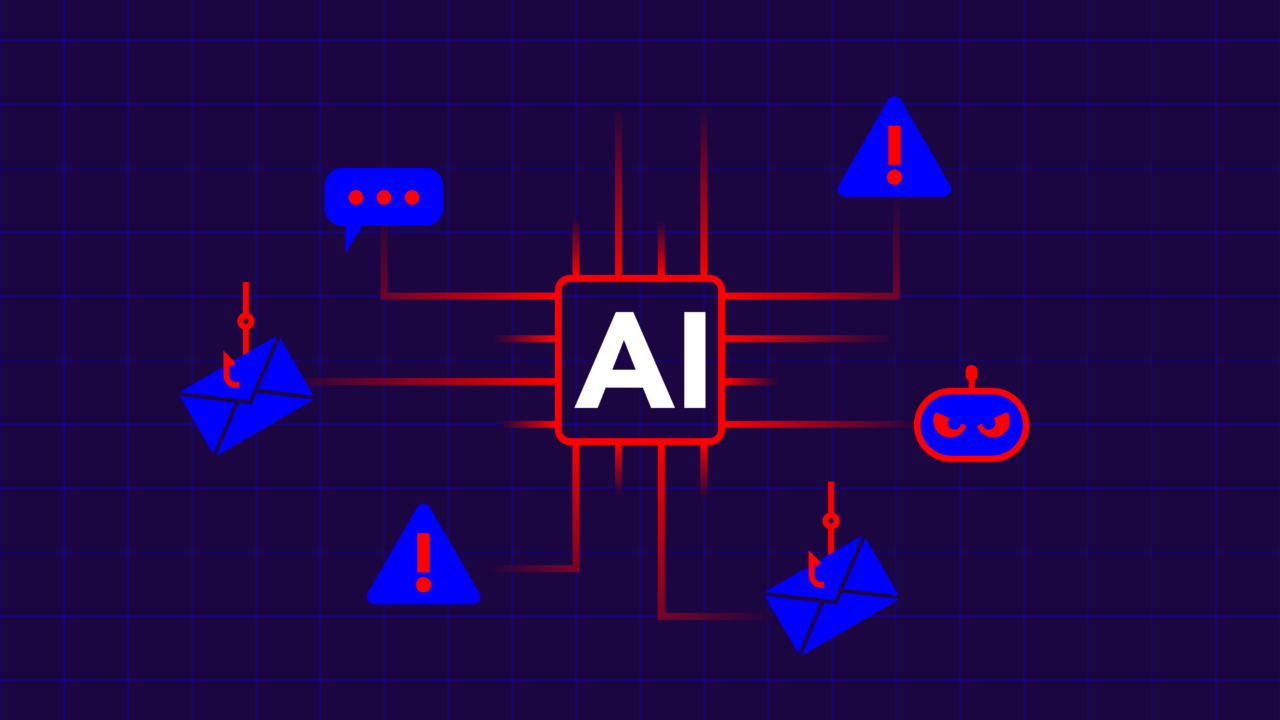
Phishing has always been an exercise in persuasion: Copy a trusted brand, mimic a familiar tone, and create urgency that pushes someone to click, pay, or share credentials.
What’s changing now is the scale and realism attackers can achieve with generative AI. Instead of relying on a handful of templates riddled with awkward grammar, modern phishing operations can produce thousands of highly tailored messages that sound like real coworkers, vendors, executives, or support agents. They can also iterate quickly, learning from what works and discarding what doesn’t, often faster than traditional defenses can adapt.
Generative AI lowers the barrier to entry and raises the ceiling on sophistication in phishing. It can help threat actors craft natural language that bypasses “too good to be true” instincts, translate scams into fluent business English, and align wording to a target’s role, department, and current projects. It also accelerates the creation of supporting assets such as fake help articles, cloned login pages, and convincingly formatted invoices.
For defenders, this creates a difficult reality: User training remains important, but it’s no longer sufficient when the content looks legitimate and arrives through channels people already trust. Protecting the inbox now requires a strong technical foundation, continuous monitoring, and clear incident process that accounts for faster-moving, more targeted campaigns.
How generative AI changes the phishing playbook
Generative AI shifts phishing from generic blasting to adaptive social engineering. Traditional phishing depended on volume and luck: Attackers sent mass emails and hoped a small percentage of recipients would bite.
With AI, the same attacker can build messages that appear written specifically for a recipient’s job function, their current vendor relationships, or the way their organization communicates. Even without privileged access, public information is often enough. Job postings reveal internal tools, press releases reveal partnerships, and social media can reveal reporting lines and travel schedules. AI helps stitch these clues into narratives that feel plausible.
Language quality is one of the biggest changes. Many users have been trained to look for telltale signs like odd phrasing, inconsistent capitalization, or spelling errors. AI removes those cues. It can also mirror tone: friendly and brief for a peer-to-peer request, formal and policy-heavy for an HR notice, or technical and concise for an IT alert. Attackers can A/B test subject lines and call-to-action language at scale, then use the best-performing variants across campaigns.
AI also accelerates “conversation phishing.” Instead of a single email with a malicious link, attackers can carry on multi-step exchanges that build trust. They can respond quickly, stay on topic, and tailor replies to objections. This makes business email compromise attacks like invoice fraud or gift card scams more effective because the exchange resembles a normal workflow.
Another shift is operational efficiency. AI can generate email content, fake “support” documentation, and scripts for call centers that follow up on an email lure. It can also create localized business context, using common terms, recognizable corporate formats, and realistic customer service language. The end result is that phishing becomes less about crude deception and more about smoothly inserting a fraudulent request into routine business communications.
For defenders, the implication is clear: Content-based red flags become less reliable. Controls that validate identity and message provenance, combined with monitoring that can spot anomalous sending patterns and domain abuse, become more important than ever.
Emerging phishing techniques enabled by AI and where defenses fail
AI-enabled phishing is not one technique but a set of enhancements that make several attack paths more dangerous.
One emerging pattern is hyper-personalized spear phishing. Attackers craft messages that reference real projects, executives, or vendors, then request an “urgent review” of a document or a quick login to a portal. The email may include plausible thread context, like a fake “Re:” subject line and a snippet of fabricated prior conversation. When users rely on familiar cues like tone and formatting, these messages can slip through.
Another technique is AI-assisted domain and brand mimicry. Attackers register lookalike domains, generate realistic email signatures, and reproduce brand style guides. If an organization hasn’t enforced strict email authentication, a phish can arrive appearing to be from the organization’s own domain or a trusted partner’s domain. Even when authentication is present, misconfigurations and partial deployments create gaps that attackers exploit.
AI also amplifies attachment and link lures. The message can include a convincing explanation for why macros must be enabled, why a PDF needs a “secure viewer,” or why a login must be reauthenticated. The content reads like something a real IT team or vendor would send. Defenses often fail here when secure email gateways focus heavily on known malicious indicators and struggle with new, clean infrastructure that hasn’t yet been classified as risky.
Conversation hijacking is another area where defenses can fail. If an attacker gains access to one mailbox through credential theft, they can use AI to rapidly review old threads, write replies that match the user’s style, and insert malicious links or payment instructions into ongoing conversations. Traditional training that says “look for unfamiliar senders” is less helpful when the sender is a legitimate internal account.
Where do defenses most commonly fail? First, overreliance on user judgment. Users are asked to act as a security control, but AI makes deception more convincing and faster. Second, incomplete enforcement of authentication policies. Many organizations publish SPF and DKIM but do not reach strict DMARC enforcement, leaving room for spoofing. Third, limited visibility into who’s sending on behalf of the brand. Without continuous monitoring, new third-party senders and misaligned services can become blind spots. Fourth, incident response that’s too slow. AI-driven phishing campaigns can evolve in hours, so detection and remediation must be equally fast.
Legal and compliance considerations for AI-driven phishing incidents
When phishing results in unauthorized access, data exposure, or fraudulent payments, legal and compliance obligations can quickly come into play. Requirements vary based on industry, the type of data involved, contractual commitments, and state breach notification laws. Even if the initial vector is “just an email,” the downstream impact may include compromised credentials, mailbox access, exfiltration of sensitive data, or alteration of payment instructions.
A key practical point is evidence preservation. AI-driven phishing can move quickly and involve multiple systems: email headers, authentication results, mailbox audit logs, and payment workflows. Organizations benefit from having a documented process for preserving logs and message artifacts so they can support internal investigations, insurance claims, law enforcement referrals, or regulatory inquiries. Email authentication results and sending infrastructure details can be critical in determining whether a message was spoofed, relayed through a third party, or sent from a compromised legitimate account.
Another consideration is vendor and third-party risk. Many phishing incidents involve impersonation of payroll providers, invoicing platforms, or customer support systems. Contracts may require certain security controls, notification timelines, or cooperation during investigations. If a third party is sending mail on your behalf without proper authentication alignment, that can create both security risk and compliance exposure.
For regulated organizations, phishing may intersect with requirements around access controls, incident reporting, and security program governance. Even outside formal regulations, organizations often have obligations to notify affected parties if personal information is exposed. The fact that an attacker used AI to craft the message typically doesn’t change the core legal duties, but it can affect the scope and urgency of response because attacks may be more targeted and harder to distinguish from legitimate communications.
Finally, communication strategy matters. During an incident, organizations should coordinate between security, legal, and communications teams before sending broad internal or external notices. Overstating certainty can backfire, but delaying too long can increase harm. A measured approach grounded in verifiable facts, including what email authentication signals show and what systems were accessed, supports a stronger response.
Strengthening email authentication and monitoring with DMARC, SPF, DKIM, and BIMI
As phishing content becomes more convincing, identity verification becomes the anchor of email security. DMARC, SPF, and DKIM work together to help receiving mail systems determine whether a message is legitimately associated with the domain it claims to come from. BIMI builds on that foundation by enabling authenticated brand indicators in supporting inboxes, reinforcing trust for legitimate mail while making impersonation more noticeable.
SPF defines which mail servers are allowed to send on behalf of a domain. It helps prevent unauthorized infrastructure from sending mail that appears to be from your domain. However, SPF alone has limitations. Forwarding can break SPF, and SPF checks the envelope sender domain, which may differ from the visible From address users see.
DKIM adds cryptographic signing so recipients can verify that messages weren’t altered in transit and that the sender is authorized to use the domain in the signature. DKIM is powerful, but it must be correctly implemented across all sending services, including marketing platforms, ticketing tools, payroll systems, and any vendor that sends from your domain.
DMARC ties SPF and DKIM to the visible From domain through alignment and tells receivers what to do when authentication fails. Critically, DMARC provides reporting that gives domain owners visibility into who’s sending mail using their domain and how those messages are performing authentication-wise. In an AI-driven phishing era, that visibility isn’t a nice-to-have—it’s how you discover shadow senders, misconfigurations, and active spoofing attempts. DMARC also enables policy enforcement. Moving from monitoring to quarantine or reject closes the door on direct-domain spoofing at scale.
BIMI can add an extra layer of user-facing assurance in the inbox for organizations that meet the requirements. While BIMI doesn’t stop phishing by itself, it can complement DMARC enforcement by making legitimate messages more recognizable, which helps users hesitate when a similar looking but unauthenticated message shows up.
A practical approach is to treat authentication as a program, not a one-time setup. Inventory all legitimate senders, ensure alignment, monitor DMARC reports continuously, and use alerts for sudden changes in sending sources or failure rates. AI may change the text of phishing emails, but it doesn’t change the fact that spoofing relies on weak authentication posture and lack of monitoring. Strong, enforced DMARC with well-managed SPF and DKIM reduces the attacker’s ability to impersonate your domain and improves your ability to detect abuse quickly.
Protecting your organization (and your reputation) in the age of generative AI
Generative AI is changing phishing by making it more believable, more targeted, and faster to iterate. The most dangerous shift isn’t that messages look prettier, but that attackers can blend into normal business workflows with convincing language, realistic formatting, and multi-step conversations. That undermines older defenses that depended heavily on spotting mistakes or recognizing generic templates. It also increases the impact of weaknesses in sender identity controls, especially when domains can be spoofed or when organizations lack visibility into who’s sending on their behalf.
Responding to this new reality requires a layered approach. Strong user habits still help, particularly around verifying sensitive requests and reporting suspicious messages quickly. But the foundation needs to be technical: well-managed SPF and DKIM, DMARC alignment with a path to enforcement, and continuous monitoring so you can identify misconfigurations, shadow senders, and active abuse before it turns into an incident. BIMI can complement this posture by making authenticated mail more recognizable in the inbox.
If you want to assess or improve your domain’s email authentication and monitoring posture, see more resources and guidance on our website or try Valimail Monitor for free.
FAQs
How does generative AI make phishing harder to detect?
Generative AI makes phishing harder to detect because it improves realism and removes many of the language flaws people have been trained to spot. Emails can be grammatically correct, context-aware, and aligned to a recipient’s role, making them feel routine rather than suspicious.
Attackers can also rapidly tailor subject lines, urgency cues, and explanations for links or attachments, then iterate based on what gets responses. This reduces the effectiveness of simple user heuristics like “look for typos” or “watch for awkward phrasing.” It also challenges some automated filters that rely on known patterns or previously seen malicious content. As a result, defenses need to rely more on identity and provenance signals, including email authentication outcomes, domain reputation, and anomalous sending behavior, rather than content quality alone.
If we have SPF and DKIM, do we still need DMARC?
Yes, because SPF and DKIM are building blocks, while DMARC is the control layer that makes them actionable for the visible From domain. SPF and DKIM can both pass in ways that don’t protect your brand identity if they aren’t aligned with the From address that users see.
DMARC enforces alignment and lets you publish a policy that tells receiving systems how to handle messages that fail authentication, such as quarantining or rejecting them. DMARC also provides reporting, which is essential for discovering all the services sending on your behalf and identifying spoofing attempts.
In practice, many organizations have partial SPF and DKIM coverage across different tools. DMARC reporting highlights gaps so you can fix them, then move to enforcement to reduce spoofing risk.
What are common DMARC deployment mistakes that attackers exploit?
Common mistakes include publishing DMARC with a “none” policy and never progressing to enforcement, leaving spoofing largely unblocked. Another frequent issue is incomplete sender inventory: Legitimate third-party platforms send on behalf of the domain without proper DKIM signing or SPF alignment, causing authentication failures that teams may ignore. Attackers benefit because defenders become accustomed to failures and hesitate to enforce stricter policies. Overly complex SPF records can also cause lookups to exceed limits, resulting in “permerror” and weakening protection. Misaligned subdomain usage is another gap where subdomains send mail without consistent authentication and policy coverage. The takeaway is that DMARC needs ongoing monitoring, clear ownership, and a structured path from visibility to quarantine or reject, backed by correcting legitimate sender configurations.
Does AI change the best practices for user training?
It changes the emphasis. User training still matters, but it should shift away from relying on grammar and “obvious scam” cues and toward verification behaviors that hold up against polished messages.
Training should reinforce out-of-band confirmation for sensitive requests, especially payment changes, payroll updates, and credential prompts. Users should be taught to scrutinize the visible From domain, reply-to differences, and link destinations, but also to recognize that convincing tone is no longer a sign of legitimacy. It also helps to run simulations that reflect modern attacks: multi-step conversations, vendor impersonation, and realistic internal announcements.
Most importantly, training should be paired with technical controls like DMARC enforcement and strong access protections, because even well-trained users will occasionally trust a message that looks legitimate.
How can we tell if a phishing email is spoofed versus sent from a compromised account?
The fastest way is to analyze authentication results and message headers alongside mailbox and sign-in logs. A spoofed email often fails DMARC alignment for the From domain, or shows suspicious SPF and DKIM results that don’t match expected sending services. DMARC aggregate and forensic style signals, where available, can also show patterns of widespread impersonation attempts.
In contrast, a compromised account email may authenticate cleanly because it’s sent through legitimate infrastructure and uses a real mailbox. Indicators then shift to behavioral anomalies: unusual login locations, impossible travel patterns, new inbox rules, unexpected OAuth grants, or sudden bursts of outbound messages. Because compromised-account attacks can pass authentication, combining email authentication monitoring with account security telemetry is essential for accurate triage.
What should we do first after an AI-driven phishing incident?
Start with containment and evidence capture. Quarantine or remove the malicious messages where possible, block known sending domains and URLs, and reset credentials for affected users, prioritizing high-privilege accounts. Preserve the original emails with full headers, authentication results, and any linked artifacts for investigation.
Then determine the scope: who received it, who interacted, and whether any accounts were accessed or payment details changed. Review mailbox rules for persistence and check for lateral phishing from internal accounts. If sensitive data may be exposed, involve legal and compliance stakeholders early to assess notification obligations under applicable USA requirements and contracts.
Finally, close the loop by addressing the root cause: enforce or tighten DMARC policy, fix SPF and DKIM alignment for legitimate senders, and update detection rules and user guidance based on how the attack succeeded.