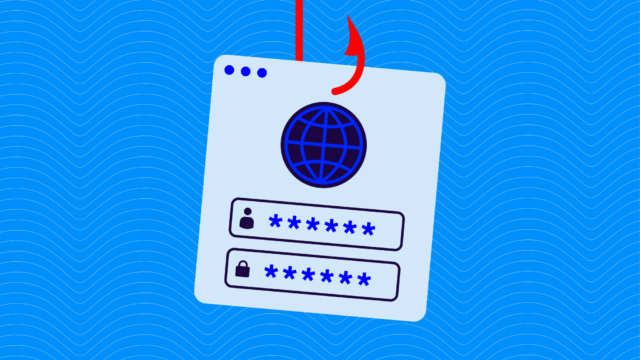
Retailers spend years earning customer trust. Attackers spend minutes exploiting it.
Every promotional offer, order confirmation, and loyalty update a retailer sends carries its brand directly into a customer’s inbox. That familiarity is exactly what makes retail email so valuable and so attractive to attackers. They don’t need to break into your systems or use sophisticated malware. They simply need to look like you.
Today, AI has made that easier than ever. Attackers can now generate emails that match your brand voice, mirror your promotional cadence, and arrive at precisely the right moment in the customer journey—at scale, automatically, and at almost no cost. What used to look obviously fake now looks convincingly real.
And the exposure is larger than most retail security teams realize. Retailers rarely send all their customer communications from one place. Marketing automation platforms, ecommerce systems, loyalty programs, customer service tools, and agency partners may all send email on a brand’s behalf—each added by a different team, at a different time, and not always visible to the security team. Every one of those senders is a potential gap. The more fragmented the sending ecosystem, the harder it becomes to distinguish your legitimate communications from a convincing fake.
The trust your customers place in your brand has become part of the attack surface. Protecting it means securing email on both sides what arrives in your organization and what leaves under your name.
Every email has two sides. So does protecting it.
Think about the last email your brand sent a customer. That message traveled from one of your systems, through one of your authorized sending services, out across the internet, and into your customer’s inbox. Along the way, two very different security questions arose, and they require two very different answers.
What arrives—the threat to your people
Your employees receive email every day from suppliers, partners, customers, and services. Some of those messages are genuine, some are not. Phishing attempts, malicious links, weaponized attachments, and business email compromise attacks are designed to reach your people and manipulate them into taking action. A single successful attack can compromise credentials, expose customer data, or trigger fraudulent transactions.
Microsoft M365 and Defender for Office 365 are built to address this side of the problem. They’re your inbound line of defense.
What leaves—the threat to your customers
Your customers receive email every day that claims to come from your brand. Most of it’s genuine. But attackers who spoof your domain send messages your customers have no reason to distrust because they appear to come from a brand your customers already know and trust.
AI has made this significantly more dangerous. A spoofed email used to be detectable: wrong tone, odd formatting, suspicious links. Today, AI-generated brand impersonation can match your voice and visual identity convincingly enough that even attentive customers are deceived. The attack doesn’t need to break anything. It just needs to look real enough for one customer to click.
This is the side that governs what leaves under your domain name, and it requires a different solution. Valimail addresses this side of the problem.
Microsoft + Valimail: Closing both sides of the trust loop
Microsoft and Valimail protect the two halves of email trust—together, they close the full loop for retail organizations.
Microsoft M365 and Defender for Office 365 protect your people from inbound email threats. Anti-phishing controls, Safe Links, Safe Attachments, and spoof intelligence give your security team the visibility and control to defend employee inboxes against sophisticated attacks. That inbound protection is the foundation your M365 investment already provides.
Valimail protects your customers from outbound domain abuse. Valimail automatically discovers every service sending email on behalf of your domains including your ESP, loyalty platform, ecommerce system, agency partners, and every other third-party sender in your ecosystem. It gives your team full visibility into authorized and unauthorized senders, automates the path to DMARC enforcement, and ensures that when an attacker attempts to send email claiming to be your brand, receiving mail systems reject it before it reaches your customers.
Together, Microsoft and Valimail protect both sides of the relationship your brand depends on.
| Microsoft M365 + Defender for Office 365 | Valimail | |
| Protects | Your people | Your customers |
| What Arrives (Inbound) | Phishing, malware, malicious links, BEC targeting your employees | — |
| What Leaves (Outbound) | — | Domain spoofing, unauthorized senders, sender sprawl targeting your customers |
| Result | Employees receive protected communications | Customers receive authentic communications |
For retail organizations, the practical outcomes are clear: Customers receive fewer fraudulent messages pretending to be your brand, security teams gain full visibility into every service sending on their behalf, legitimate email reaches inboxes reliably, and brand integrity is protected across every channel where customers hear from you.
Three questions every retail security leader should ask
A few questions can help identify where gaps exist in your current email security posture:
1. Do you know every service currently sending email on behalf of your domains? Third-party senders multiply quickly as marketing, loyalty, ecommerce, and customer service programs grow, often without the security team’s involvement.
2. Have you reached DMARC enforcement across all your domains? A monitoring-only policy identifies problems but doesn’t stop them. Enforcement is what instructs receiving mail systems to reject unauthorized senders before they reach your customers.
3. Can your customers reliably tell when an email actually came from you? If the answer isn’t a confident yes, your brand’s trusted communications may already be part of someone else’s attack.
Protecting the trust your brand depends on
Retailers invest heavily in earning customer trust through personalized experiences, loyalty programs, and digital engagement. That investment depends on customers continuing to trust the communications that make it possible.
AI has raised the stakes. The gap between a legitimate email and a convincing fake has never been narrower. And closing it requires securing both sides of the email trust loop—the inbound side your M365 investment already addresses, and the outbound side that governs what leaves under your brand’s name.
Microsoft and Valimail help retail organizations protect both so every message a customer receives from your brand is one you actually sent.