Not all domain monitoring services do the same job.
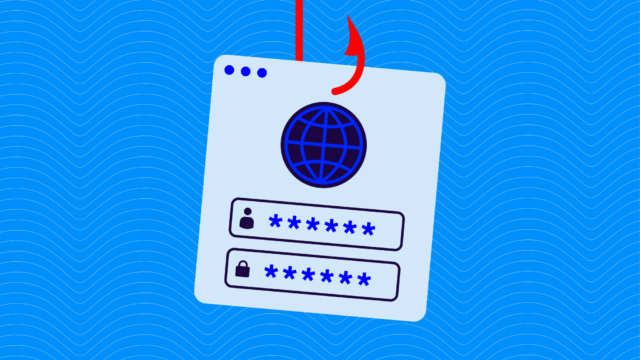
Some are one feature inside a much larger digital risk protection suite, sitting alongside social media monitoring, marketplace counterfeit detection, and dark web surveillance. Others are built specifically to catch the domains that threaten your organization’s email security: the lookalike registrations that show up in phishing campaigns targeting your customers, partners, and employees.
Figuring out which category you actually need is most of the work.
Below, we compare 7 domain monitoring services on what they catch, how fast they act, and who they’re built for.
What to look for in a domain monitoring service
Domain monitoring services come in all shapes and sizes. Here’s what to look for before you commit:
- Coverage. How many top-level domains (TLDs) and variation patterns does the service watch for? Typosquatting, combosquatting, homograph attacks, and new TLD registrations all require slightly different detection logic. A service that only checks a handful of common patterns will miss a lot.
- Detection speed. Domain registrations happen constantly. The gap between a malicious domain going live and your team finding out about it is the window an attacker gets to operate freely.
- False positive handling. A service that floods you with alerts for every domain that loosely resembles yours becomes something you eventually stop checking. Look for context-aware prioritization instead of raw volume.
- Takedown support. Some services just flag suspicious domains and leave the rest to you. Others have established relationships with registrars and hosting providers that speed up removal. Know which one you’re buying.
- Connection to your broader security posture. A lookalike domain rarely operates alone. It’s usually the infrastructure behind a phishing campaign, and that campaign is often more effective against organizations that haven’t locked down Domain-based Message Authentication, Reporting, and Conformance (DMARC) on their own domain. A monitoring service that operates in isolation from your email authentication leaves a gap.
7 best domain monitoring services in 2026
Ultimately, these services split into two genuinely different categories:
- Full digital risk protection platforms cover domains as one piece of a much broader mandate, including social media impersonation, marketplace counterfeits, and mobile app fraud.
- Domain-and-email-focused services concentrate specifically on the threats that target your organization through lookalike domains and phishing infrastructure.
Which one you need depends on what’s putting your organization at risk. Sometimes, the answer might be multiple solutions, if you’re being targeted on multiple fronts.
| Service | Primary focus | Takedown support | Email security integration | Best for |
| Valimail | Domain + email authentication | Via Domain Lookalike Finder, self-managed | Yes — native (Monitor, Enforce) | Orgs whose primary risk is email-based phishing |
| Netcraft | Phishing + domain takedown | Yes — fast, established registrar relationships | No | Orgs whose primary risk is phishing infrastructure |
| ZeroFox | Broad digital risk protection | Yes — analyst-managed | No | Orgs with heavy social media and dark web exposure |
| BrandShield | Broad digital risk protection | Yes — fully managed | No | Orgs needing counterfeit and IP enforcement alongside domains |
| Bolster.ai | AI-automated domain + social detection | Yes — automated, narrower partner network | No | Orgs wanting fast, automated takedowns without analyst overhead |
| CSC Digital Brand Services | Enterprise domain portfolio management | Yes — established enterprise relationships | No | Large enterprises managing massive domain portfolios |
| DomainTools | Domain intelligence and investigation | No — data and intelligence only | No | Security teams doing their own threat investigation |
1. Valimail
Valimail’s approach to domain monitoring starts from a different place than most of the field. Rather than treating domains as one signal inside a broad brand protection suite, Valimail anchors domain monitoring to email authentication, because that’s where lookalike domains do their damage.
The Domain Lookalike Finder scans for newly registered domains that resemble yours, flagging typosquats, combosquats, and other variation patterns before they show up in a phishing campaign. Valimail Monitor (free to start) shows you exactly who’s sending email as your domain right now, giving you the other half of the picture that pure domain-monitoring vendors don’t touch.
Valimail doesn’t cover social media impersonation, marketplace counterfeits, or mobile app fraud. However, if your primary concern is lookalike domains being used to phish your customers, partners, or employees, pairing domain monitoring with DMARC enforcement closes a gap that most monitoring-only vendors leave wide open.
Key features:
- Domain Lookalike Finder scans for typosquats, combosquats, and other variation patterns targeting your brand
- Valimail Monitor gives free, continuous visibility into who’s sending email as your domain
- Direct path from detection to enforcement through Valimail Enforce and DMARC at p=reject
- No separate vendor relationship needed to connect domain threats to your email authentication posture
- Reporting designed for security teams, not just brand or legal departments
Who it’s for: Organizations whose primary domain risk is email-based phishing and impersonation, and who want domain monitoring connected directly to their authentication strategy rather than sitting in a separate silo.
2. Netcraft
Netcraft has been mapping the internet since the mid-1990s, and that history shows up in its takedown speed. The company has built deep relationships with hosting providers and registrars over three decades, which translates into a reputation for getting cooperative providers to act within hours once a phishing domain goes live.
The tradeoff is scope. Netcraft goes deep on domains and phishing infrastructure specifically, with lighter coverage of social media, mobile apps, and marketplace abuse. For organizations whose threat model is concentrated on phishing and domain spoofing, that focus is a feature. For organizations facing broader brand abuse across multiple channels, Netcraft typically needs to be paired with something else.
Key features:
- Decades of registrar and hosting provider relationships translate into fast cooperative takedowns
- Detection through Certificate Transparency logs and passive DNS catches domains shortly after registration
- Heavy automation in the takedown pipeline, with most actions completed without manual analyst review
- Browser and app-level blocklist protection adds a layer of user-facing defense during takedown windows
- Narrow, deep focus specifically on phishing and domain-based threats
Who it’s for: Organizations whose primary risk is phishing infrastructure and domain spoofing who want a specialist rather than a broad suite.
3. ZeroFox
ZeroFox has grown from a domain and phishing monitoring tool into a comprehensive external cyber-risk platform. Domain monitoring is one piece of a much larger mandate that includes social media impersonation detection across more than 180 platforms, dark web monitoring, attack surface management, and physical security intelligence for executive protection. For organizations with heavy social media exposure or a need for one platform covering multiple external risk categories, that breadth is valuable.
The tradeoff shows up in domain-focused depth. ZeroFox’s domain and phishing protection monitors over 100 million domains and catches typosquatting at registration, which is solid coverage, but the takedown workflow relies more heavily on analyst-mediated review than some narrower competitors, which can introduce delays compared to fully automated alternatives.
Key features:
- Domain and phishing protection monitors 100M+ domains with detection at registration and SSL issuance
- Social media impersonation coverage across 180+ platforms, far broader than domain-only competitors
- Dark web monitoring and physical security intelligence extend coverage well beyond domains
- Analyst-supported takedown workflow for organizations that want human review in the loop
- Attack surface management adds visibility beyond brand-specific threats
Who it’s for: Organizations with heavy social media exposure that need one platform covering domains, social impersonation, and dark web threats together.
4. BrandShield
BrandShield is purpose-built around external digital risk protection, pairing detection technology with a managed-service delivery model. Its AI-driven clustering engine groups related threats together, which helps surface complete networks of copycat domains and lookalike sellers rather than flagging each instance in isolation. Coverage extends across domains, social media, marketplaces, paid ads, and mobile apps, with a named threat hunter managing enforcement for enterprise clients.
BrandShield’s domain monitoring is solid, but it’s one piece of a platform built primarily for brand, legal, and trademark teams dealing with counterfeit goods and IP enforcement alongside phishing. Security teams whose concern is narrowly domain-and-email-based threats may find the platform’s strengths weighted toward problems they don’t have.
Key features:
- AI-driven threat clustering surfaces complete copycat networks rather than isolated instances
- Coverage spans domains, social media, marketplaces, paid ads, mobile apps, and the dark web
- Managed-service delivery model with a named threat hunter for enterprise accounts
- Established takedown relationships across registrars, hosts, search engines, and social platforms
- Visual brand abuse detection through reverse-image search, useful for logo and trademark misuse
Who it’s for: Brand, legal, and trademark teams whose priority includes counterfeit and IP enforcement alongside phishing and domain abuse.
5. Bolster.ai
Bolster takes an automation-first approach to domain and phishing detection, using machine learning models trained specifically to catch new attack techniques that rule-based systems tend to miss. The platform advertises very fast automated takedown times for straightforward phishing cases, which is great for teams that want speed without routing every case through human analyst review.
Bolster’s social media coverage is limited to a smaller set of major platforms compared to broader competitors, and its takedown partner network isn’t as extensive. This means complex or unusual cases can move slower than the platform’s marketed speed implies.
Key features:
- AI-driven detection specifically tuned to catch novel phishing techniques rule-based tools miss
- Automated takedown pipeline designed to minimize manual analyst involvement
- Computer vision compares page screenshots against legitimate sites to catch visual impersonation
- Faster turnaround on straightforward, high-confidence phishing cases
- Lower overhead model compared to fully managed-service competitors
Who it’s for: Organizations that want fast, largely automated domain and phishing detection without the overhead of an analyst-managed service.
6. CSC Digital Brand Services
CSC approaches domain monitoring from the angle of large-scale portfolio management, which makes it a fit for enterprises managing hundreds or thousands of domains across multiple brands, regions, and business units. The platform combines monitoring with domain registration and portfolio administration, giving large organizations one place to both manage their legitimate domain holdings and watch for threats against them.
This is squarely an enterprise play. Smaller organizations or those without a sprawling domain portfolio to manage alongside threat monitoring will find CSC’s strengths aimed at a problem they don’t have, and the pricing and onboarding process reflect that enterprise focus.
Key features:
- Combines domain portfolio management with threat monitoring in one platform
- Built for organizations managing domains across multiple brands, regions, or business units
- Established enterprise relationships support coordinated takedown efforts at scale
- Long-standing presence in domain registration services lends institutional depth
- Reporting designed for large, multi-stakeholder domain governance structures
Who it’s for: Large enterprises that need domain monitoring combined with active management of a large, complex domain portfolio.
7. DomainTools
DomainTools is primarily a domain intelligence and investigation platform. Security teams use its data, including WHOIS history, passive DNS, and domain risk scoring, to research suspicious domains, attribute infrastructure to threat actors, and build the evidence needed to support investigations or takedown requests filed elsewhere.
DomainTools doesn’t file takedowns on your behalf or run continuous brand-specific monitoring out of the box. It’s built for teams that want deep data to investigate threats themselves rather than a managed service that handles detection and removal end to end.
Key features:
- Deep domain intelligence including WHOIS history, passive DNS, and infrastructure attribution
- Domain risk scoring helps prioritize which suspicious registrations warrant investigation
- Strong fit for threat intelligence teams building their own investigative workflows
- API access supports integrating domain data into existing security tooling
- Useful for attributing infrastructure across multiple related domains and campaigns
Who it’s for: Security and threat intelligence teams that want deep domain data to investigate threats themselves rather than a managed monitoring-and-takedown service.
How to choose the right domain monitoring service
A few questions narrow down your list:
- Is your primary risk domain-and-email-based, or broader brand abuse? If lookalike domains feeding phishing campaigns are the main concern, a focused service like Valimail or Netcraft fits better than a broad suite.
- Do you want monitoring connected to your email authentication, or handled separately? Most domain monitoring vendors operate independently of DMARC. If you want detection and enforcement working together rather than living in two different dashboards, that narrows the field.
- Do you need a managed service, or are you comfortable acting on alerts yourself? Managed-service platforms cost more but reduce the operational burden on your team. Self-managed monitoring is more affordable but requires someone on your side to act on what gets flagged.
- How large and complex is your domain footprint? A single-brand company with one primary domain has different needs than an enterprise managing dozens of brands and regional variants.
Not sure where your organization stands? Check your domain to see your current authentication status, or sign up for Valimail Monitor to get free visibility into who’s sending email as your domain today.
Frequently asked questions
What is the best domain monitoring service?
It depends on what’s threatening your organization. For email-based phishing and lookalike domain threats, Valimail and Netcraft are strong options. For organizations facing broader brand abuse across social media, marketplaces, and mobile apps, a full digital risk protection platform like ZeroFox or BrandShield is a better fit.
What’s the difference between domain monitoring and brand protection software?
Domain monitoring watches for suspicious domain registrations that resemble your brand. Brand protection software, or digital risk protection, is a broader category that typically includes domain monitoring alongside social media impersonation detection, marketplace counterfeit monitoring, mobile app fraud detection, and dark web surveillance.
Does domain monitoring replace DMARC?
No. They address different threats. DMARC stops attackers from sending email that appears to come directly from your domain. Domain monitoring catches separately registered lookalike domains that DMARC has no authority over. Organizations facing both threats, which is most organizations, need both protections in place.