From November 6 through November 9, 2026, many email messages sent to Outlook.com addresses bounced for an unexpected reason: The sending domain didn’t have a Domain-based Message Authentication, Reporting, and Conformance (DMARC) record.
The issue occurred on a Friday evening. Microsoft investigated, found the root cause, rolled back the change, and had messages flowing normally again by Monday. Problem solved.
But the episode is worth a closer look, because it shows two things: First, email is a complicated system with a lot of moving parts, and any one of them can change without warning. And second, domains that already had DMARC in place sailed through the whole thing without a single one of these bounces.
What happened
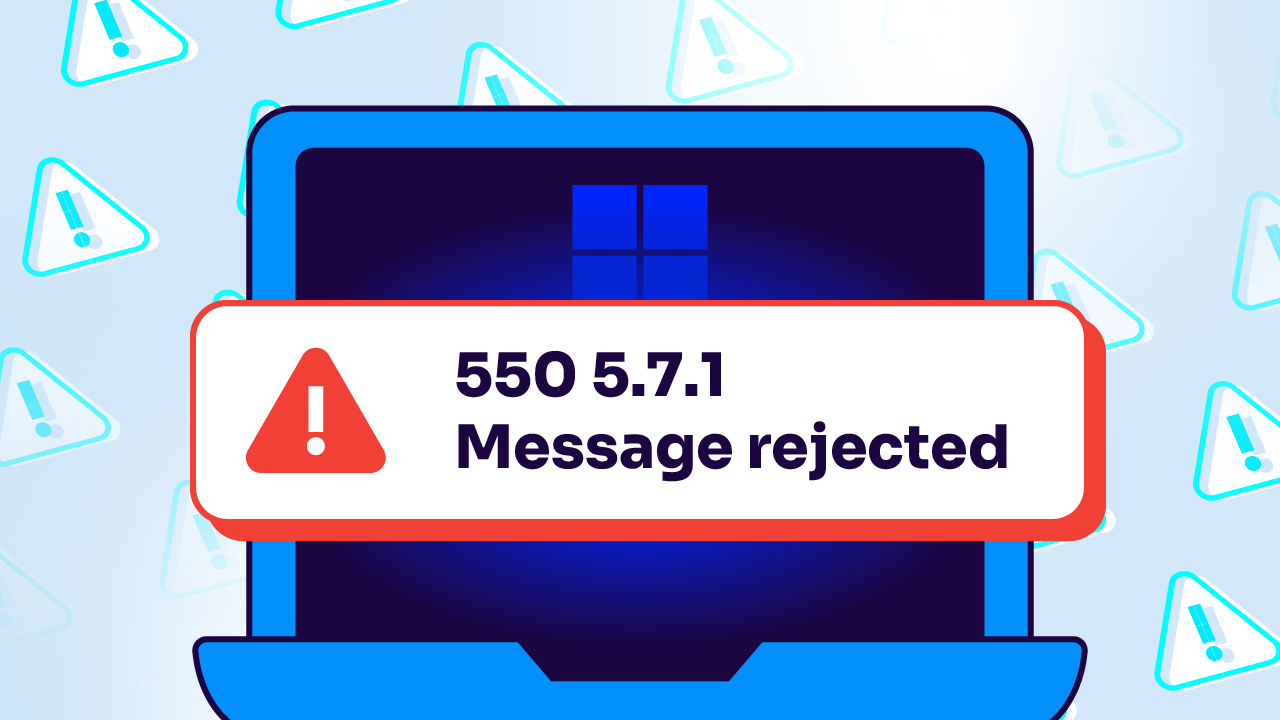
On Friday, November 6, email administrators on industry mailing lists started reporting bounces from Microsoft’s consumer mailbox services. The rejections looked like this: 550 5.7.1 Message rejected: Message lacks SPF/DKIM/DMARC Auth Records.
A few details made this one unusual:
- It only affected Microsoft OLC — their consumer webmail domains, such as outlook.com, hotmail.com, live.com, and msn.com (what we used to refer to as Hotmail). Business domains (corporate mail) hosted on Microsoft 365 accepted the same messages normally.
- Many of the rejected messages passed Sender Policy Framework (SPF) and DomainKeys Identified Mail (DKIM) email authentication checks. What they lacked was a published DMARC record.
- Small senders were the ones caught: The primary impact seemed to be domains sending far fewer than 5,000 messages a day.
- It was intermittent. A resend sometimes went through, which made troubleshooting harder.
The small-sender rejections surprised people most. In April 2025, Microsoft announced new requirements for high-volume senders to its consumer email services. Domains sending more than 5,000 messages a day must authenticate with SPF, DKIM, and DMARC, and Microsoft began enforcing those requirements in May 2025.
That 5,000 daily message threshold strongly implied a carve-out for everyone else. A small business sending a few dozen invoices a day had no reason to think the DMARC requirement applied to it.
We confirmed the behavior in our own testing. When we removed the DMARC record from a number of low-volume test domains, Outlook.com rejected these messages, while Microsoft 365 test mailboxes accepted the same messages without complaint.
As reported in The Register (and elsewhere), Microsoft tracked the problem as a service incident and identified the cause quickly. According to its incident report, “a recent update to the spam enforcement rules caused email messages to be incorrectly marked and blocked.” The impact ended early Monday, November 9, and Microsoft fully rolled back the update. The company also said it would review its update procedures.
Email is a complex machine with a lot of moving parts
It’s easy to look at an incident like this and see one company’s mistake, but that overlooks the more useful lesson.
Every message you send passes through a long chain of systems before anyone reads it. Your sending platform, DNS, the recipient’s mail servers, and layer after layer of filtering all have a say. Mailbox providers update their filters constantly, because malicious attackers change tactics constantly. Nearly all of those updates go unnoticed. Once in a while, an update to filters has an unexpected impact — an effect nobody intended.
Think of it like shipping a package overseas. Your paperwork can be perfect for every rule you know about, and the box can still sit in customs because an inspection procedure changed overnight. You can’t control customs, but you can make sure your paperwork meets the strictest standard anyone is likely to apply. IT administrators enabling email sending are in the same position. You don’t control what happens on the receiving side, but you do control how well your own domain is set up. When filtering gets stricter, on purpose or by accident, the domains that already meet the highest bar keep flowing.
Why DMARC made the difference
The fix during the incident was the same thing that would have prevented it in the first place: Publish a DMARC record. This issue exposed that there are many smaller organizations sending lower volumes of email, where messages were generally flowing to the inbox just fine, until they weren’t. For those domains, SPF and DKIM was enough. Until it wasn’t.
DMARC is a valuable email authentication signal that mailbox providers look for. Google and Yahoo announced DMARC requirements for bulk senders in 2023, and Microsoft followed with its own in 2025. Domains that already published a DMARC record seemed to avoid these rejections, regardless of how much email they send.
If you’ve been thinking of DMARC as something only bulk senders need, this incident is a good reason to reconsider. Any domain that sends email, even a handful of messages a day, should have a DMARC record.
And implementing DMARC sets your domain up with a future-proof configuration. There’s a strong chance that future email sender requirement updates will mandate DMARC for all, not just bulk senders. This will keep you ahead of that eventual change.
Valimail customers were protected
Valimail customers didn’t have to think about any of this. Every one of them has DMARC in place for their domains, because working with Valimail starts with a DMARC record. When Outlook.com’s filtering tightened unexpectedly, our customers’ email kept going.
That’s the true value of getting email authentication and domain protection right ahead of time. Our customers were protected.
Getting a DMARC record in place
If your domain doesn’t have DMARC yet, you can start with a simple record. Publish a TXT record at _dmarc.yourdomain.com that looks something like this: _dmarc.example.com IN TXT “v=DMARC1; p=none; rua=mailto:dmarc-reports@example.com”
A policy of p=none tells receivers not to act on failing messages, only to send you reports about them. It’s a safe first step, and it would have been enough to avoid this recent Microsoft issue.
It’s only a first step, though. A p=none policy doesn’t stop anyone from spoofing your domain. The real protection comes from reading those aggregate reports, making sure every legitimate service that sends on your behalf authenticates properly, and then moving to p=quarantine or p=reject.
Those reports are XML files, and they aren’t much fun to read by hand. Valimail Monitor is free, and it turns these coded reports from dozens of mailbox providers into a clear picture of who’s sending email messages using your domain. When you’re ready to go further, Valimail Enforce automates the path to enforcement.
A note for ESPs and sending platforms
If you run an email service provider (ESP) or marketing platform, incidents like this one land on your support desk. Your customers’ messages bounce, and they ask you why. Plenty of those customers send at low volume and many have never set up DMARC (nor do they even know what it is).
Did you know Valimail already partners with ESPs to give their customers a fast path to Valimail Monitor, our 100% free DMARC solution? An integration makes it easy for your customers to get a DMARC record in place. That means fewer surprises for them and fewer tickets for you the next time a mailbox provider’s filtering changes. Get in touch if you’d like to talk about partnering with us.
Protect your domains with Valimail
Mailbox providers will keep changing their filters, and now and then a change will surprise everyone. A DMARC record won’t stop the surprise from happening, but it does make sure your domain is on the right side of the line when it does.
Valimail helps thousands of organizations get DMARC in place and get to enforcement, without the guesswork of managing it in-house. Start with a free look at your own domain with Valimail Monitor, or reach out to talk to us to learn more about Valimail Enforce.