
Check your domain now

Enter your domain for an instant security scan and detailed authentication report.

Your domain is not protected!

We’ve found security gaps in your email authentication. Review your full report below to see what's at risk and how to fix it.

Your domain is not protected!

We’ve found security gaps in your email authentication. Review your full report below to see what's at risk and how to fix it.

Get Started Free
AUTHENTICATION STATUS FOR JANUARY 10, 2025

exampledomain1.com

is not protected against impersonation attacks

DMARC at Enforcement

SPF Record Configured

BIMI Ready

AUTHENTICATION STATUS FOR JANUARY 10, 2025

exampledomain1.com

is not protected against impersonation attacks

DMARC at Enforcement

SPF Record Configured

BIMI Ready

Understanding DMARC, SPF, and BIMI

When scammers can impersonate your domain, both your reputation and revenue are at risk. These three essential protocols work together to protect your brand, secure customer communications, and prevent email fraud.

exampledomain1.com

exampledomain1.com

exampledomain2.com

DMARC

See exactly who sends email from your domain and block unauthorized senders instantly. DMARC (Domain-based Message Authentication, Reporting, and Conformance) gives you complete control over your email security.

SPF

Control which servers can send email from your domain. SPF (Sender Policy Framework) blocks impersonators and gets your legitimate emails delivered to the right inbox, not spam.

BIMI

Get your verified logo to display in customer inboxes. BIMI (Brand Indicators for Message Identification) helps customers instantly recognize legitimate emails from your brand and ignore imposters.

DMARC Results

Try Monitor Free
Your domain is at risk for phishing and spoofing.

Current DMARC Record

Learn more about DMARC

Deliverability

DMARC policy and reporting shortcuts to avoid
Read more

DMARC

Not all DMARC enforcement policies are created equal
Read more

DMARC

DMARC challenges: Here’s why you haven’t reached DMARC p=reject
Read more

SPF Results

Try Monitor Free
?
You’re at risk of blocking good email.

Receivers are limited to 10 DNS lookups

Current SPF Record

Learn more about SPF

SPF

SPF macros explained: Everything you need to know
Read more

Email Authentication

What is SPF flattening and why doesn't it work?
Read more

SPF

Common problems with SPF you’re probably overlooking
Read more

BIMI Results

Try Monitor Free
You’re missing out on brand impressions and email engagement.

Criteria

DMARC not at Enforcement
BIMI Logo Success
BIMI Logo certified

Your BIMI Record

Light Mode

Dark Mode

Learn more about BIMI

BIMI

10 benefits of BIMI (and why you need BIMI)
Read more

BIMI

What Is BIMI (Brand Indicators for Message Identification)?
Read more

DMARC Results

Try Monitor Free
Your domain is at risk for phishing and spoofing.

Current DMARC Record

Learn more about DMARC

Deliverability

DMARC policy and reporting shortcuts to avoid
Read more

DMARC

Not all DMARC enforcement policies are created equal
Read more

DMARC

DMARC challenges: Here’s why you haven’t reached DMARC p=reject
Read more

SPF Results

Try Monitor Free
?
You’re at risk of blocking good email.

Receivers are limited to 10 DNS lookups

Current SPF Record

Learn more about SPF

SPF

SPF macros explained: Everything you need to know
Read more

Email Authentication

What is SPF flattening and why doesn't it work?
Read more

SPF

Common problems with SPF you’re probably overlooking
Read more

BIMI Results

Try Monitor Free
You’re missing out on brand impressions and email engagement.

Criteria

DMARC at Enforcement
BIMI Logo Success
BIMI Logo certified

Your BIMI Record

Light Mode

Dark Mode

Learn more about BIMI

BIMI

10 benefits of BIMI (and why you need BIMI)
Read more

BIMI

What Is BIMI (Brand Indicators for Message Identification)?
Read more
  • DMARC (Domain-based Message Authentication, Reporting and Conformance) is a widely-deployed standard for authenticating sender identity. It provides insights into all services sending on your domain. Domains at DMARC enforcement can prevent brand and executive impersonation attacks.

  • SPF (Sender Policy Framework) is a part of the email authentication framework. In its most basic usage it allows a whitelist for IP addresses that can send email using your domain. Valimail’s more modern cloud friendly version creates SPF records in real-time based on automatic service identification.

Need help with your results?

If your domain check left you with questions, book a free consultation with one of our DMARC experts. We’ll walk through your results, solve issues, and help you figure out what to do next with no pressure, no sales pitch.

See all that Valimail has to offer

Valimail has everything you need to enforce DMARC, rotate DKIM keys, automate SPF, and implement BIMI to protect your email and brand.

FAQs about Valimail's email domain checker

As the global leader in DMARC and email authentication, Valimail has helped over 100,000 organizations secure their domains and stop impersonation attacks. In this section, we answer the most common questions and email domain checker FAQs so you can protect your email domains with peace of mind.

What is Valimail's domain checker?

Our domain checker is a free diagnostic tool that tells you whether your domain is protected against email impersonation…or wide open for attackers to exploit.

Just enter your domain, and you’ll get an instant report showing your DMARC, SPF, and BIMI status. You’ll see whether you’re at enforcement (protected) or still vulnerable, plus a breakdown of what’s configured correctly and what needs attention.

It’s a quick, easy, and free health checkup for your email authentication. You’ll walk away knowing exactly where you stand and what to fix if something’s off.

Enter your domain. That’s it. No account required, no credit card, no 47-field form to fill out.

Once you hit “check domain,” our tool queries your DNS records and analyzes your DMARC, SPF, and BIMI configuration in real time. Within seconds, you’ll get a detailed report that shows:

  • Whether your domain is protected against impersonation attacks
  • Your current DMARC policy (and whether it’s actually enforcing anything)
  • Your SPF and BIMI status at a glance
  • What’s working, what’s broken, and what’s missing entirely

From there, you can troubleshoot on your own, sign up for free monitoring, or book a call with one of our DMARC experts to walk through next steps.

An email domain checker is a tool that scans your domain’s DNS records to see if your email authentication (DMARC, SPF, and BIMI) is configured correctly. It tells you whether your domain is protected against spoofing or vulnerable to impersonation attacks.

Just enter your domain in the checker above and hit the button. You’ll get an instant report—no account or sign-up required.

Yes, Valimail’s domain checker tool is completely free. You can check as many domains as you want without creating an account. 

We also have a free solution, Monitor, that allows you to view all of your email senders and get visibility into your domain. 

Your domain health report shows your DMARC policy status, SPF configuration, and BIMI setup. It also flags what’s missing or misconfigured so you know exactly what to fix.

Our DMARC checker pulls your DMARC record from DNS and shows whether you’re at enforcement (p=reject or p=quarantine) or still in monitoring mode (p=none).

Yes. The domain spam checker shows whether your domain is properly authenticated, which directly impacts whether your emails land in the inbox or get flagged as suspicious spam.

SPF specifies which servers can send email from your domain. DKIM adds a digital signature to verify that messages weren’t tampered with. DMARC ties them together and tells mailbox providers what to do when authentication fails.
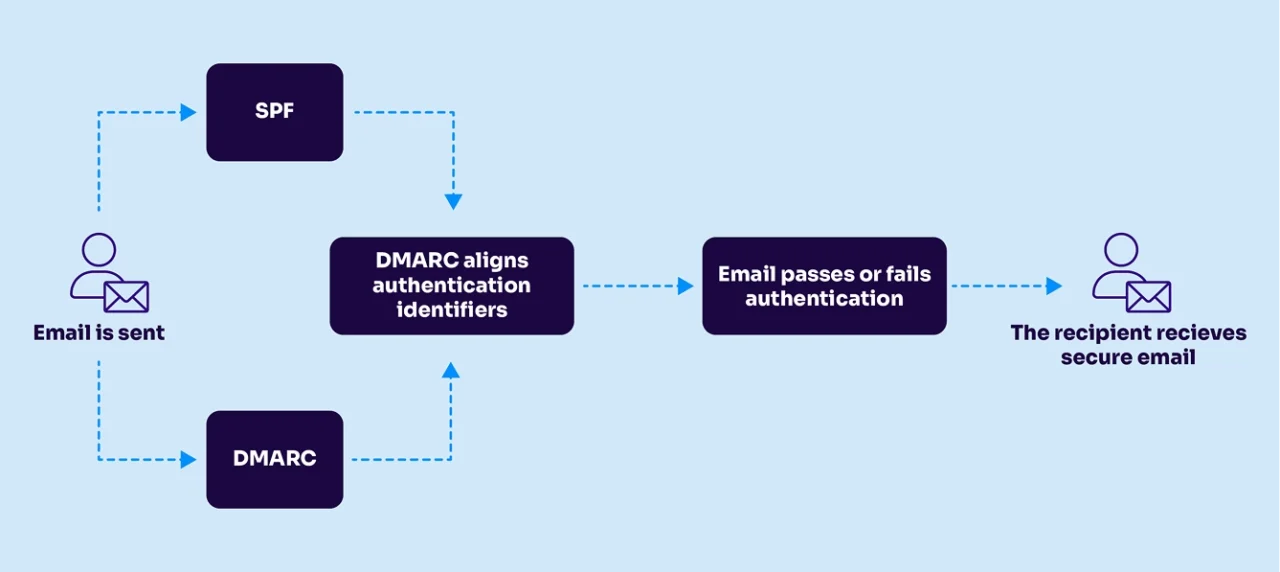
SPF specifies which servers can send email from your domain. DKIM adds a digital signature to verify that messages weren’t tampered with. DMARC ties them together and tells mailbox providers what to do when authentication fails.
How-DMARC-Works-scaled-1.webp

Domain validation confirms that your email authentication records exist and are formatted correctly. Our domain validator checks this automatically when you run a scan.

At a minimum, check after any DNS changes or when adding new email services. For ongoing visibility, sign up for free monitoring to catch issues before they affect deliverability.

Additional domain troubleshooting resources

Explore more about DMARC, SPF, and BIMI, and get expert insights into troubleshooting resources. Whether you’re just getting started or fine-tuning your enforcement strategy, these resources will help you secure your domain and stay ahead of emerging threats.

SPF10LookupLimitProblem

The SPF 10 lookup limit problem: why it breaks email

Read more

Why is my DMARC failing?

DMARC fail? Here’s what it means and how to fix it

Read more

troubleshooting bimi svg images

How to troubleshoot and validate SVG Tiny exports for BIMI

Read more

[UPCOMING WEBINAR] Valimail Product Release: Get Better Brand Protection and Brand Impressions – Register HERE