TLDR: Your Black Friday email can have a great subject line, compelling offer, and perfect send timing, but none of that matters if it never reaches the inbox. Email authentication (SPF, DKIM, and DMARC) is what mailbox providers check first, and if your domain isn’t authenticated properly, your holiday campaigns go straight to spam (or worse). Here’s how to find out where you stand, and the one question to ask your IT team this week.
You’ve got the segment built. The discount’s approved. Creative is in review, the send calendar’s locked, and someone has strong opinions about whether the CTA should say “Shop Now” or “Get 40% Off.”
But all of that assumes the email shows up.
Ultimately, the biggest factor in whether your Black Friday campaign performs has pretty much nothing to do with the campaign. Gmail, Outlook, and Yahoo decide whether your message reaches the inbox before a human ever reads your subject line.
And the thing they check first is whether your email is actually from you.
That check happens in milliseconds, and it’s completely invisible to your ESP dashboard. If you fail it during the highest-volume email week of the year, you’ll spend Black Friday watching open rates plummet
Fortunately, it’s super fixable with a one-time setup, and you probably don’t have to do the technical part yourself.
Mailbox providers check authentication before your subject line
Every email you send gets evaluated in a specific order. Sure, content quality matters, but it’s not first.
The first question is identity: Can this message prove it came from the domain it claims to be from?
That’s what these email protocols answer:
- SPF tells mailbox providers which servers are allowed to send email using your domain.
- DKIM adds a tamper-proof signature to each message, proving it came from you and wasn’t altered along the way.
- DMARC ties the first two to the “From” address your customer sees, and tells Gmail and Outlook what to do when something fails the check.
Now, you’re reading those words thinking this probably sounds like an IT thing, and you’re not totally wrong. However, it’s that kind of thinking that makes it slip at the worst possible time. DMARC enforcement is a collective effort across marketing and IT—think of it more as a team pursuit that shows up on both your KPIs.
DMARC lives in DNS records (not in your ESP), so it rarely shows up on a marketing checklist even though it directly determines campaign performance.
Ultimately, this matters for you because properly authenticated email:
- Lands in the inbox more consistently
- Improves open rates (by as much as 20%)
- Increases click rates
- Boosts revenue per send
And that’s all without changing a word of your creative. You don’t even have to ask for more marketing budget. Unauthenticated email fights for placement against everything else, and during Black Friday week, everything else is a lot.
Why Q4 is the worst possible time to have an unprotected domain
Two things happen in November, and they compound.
- Mailbox providers get strict. Volume spikes across every sender on earth, spam complaint rates climb, and filtering tightens accordingly. Gmail, Yahoo, and Microsoft all require authentication from bulk senders, and Q4 is when enforcement bites hardest. A weak configuration that got by in July can suddenly stop working in November.
- Attackers show up wearing your logo. Retail impersonation peaks during the holidays for an obvious reason: Your customers are expecting promotional email from brands they trust, and they’re clicking fast. A fake shipping confirmation email from your domain is scary effective in late November, and it costs the attacker almost nothing to send.
They don’t have to break into anything. They just show up as you.
When that happens, two things follow. Your customers get defrauded in your name—and they don’t blame the attacker, they blame you. And every spam complaint filed against those fake messages damages the sending reputation of your real campaigns.
Plus, most marketing teams add sending tools in Q4. A gift-guide platform, an SMS partner, a countdown-timer service, a seasonal review request app. Every one of those is another service authorized to send as your brand, and every one of them is another open door somebody should probably be checking…preferably, before an attacker does.
Go ask your IT team one question
Here’s the most useful thing you can do this week. Find whoever owns your DNS (IT, security, ops, that one engineer who always answers Slack) and ask:
“Are we at DMARC enforcement?”
That’s it. Here’s what the potential answers mean:
“What’s DMARC?”
Your domain is unprotected. Anyone can send email that appears to come from your brand, and your campaigns are working against a headwind you didn’t know existed.
This isn’t a crisis, and it isn’t your fault—plenty of well-run companies are here. But it is something to start now rather than in January.
What to ask for: Visibility first. Valimail Monitor is free and shows every service currently sending email using your domain, by name. Your IT team can have it running in an afternoon, and the report almost always surprises the team.
“Yeah, we have a DMARC record”
Follow up with: “Is the policy set to none, quarantine, or reject?”
This matters more than anything else in this article. A DMARC record at p=none is monitoring only. It reports what’s happening and blocks nothing. Plenty of organizations publish a record, check the compliance box, and stop there (but that means you’re still fully impersonable).
p=quarantine and p=reject are enforcement. That’s where protection starts.
What to ask for: A path to enforcement. Getting there means identifying every legitimate sender first so nothing breaks, but that work always stalls when nobody clearly owns it. Automation makes this substantially faster than doing it by hand, and that’s what Valimail Enforce is for.
“We’re at enforcement already”
Wonderful. You have some incredible marketing advantages (beyond trust from your customers), and it’s a marketing lever rather than a security control.
Please, read on.
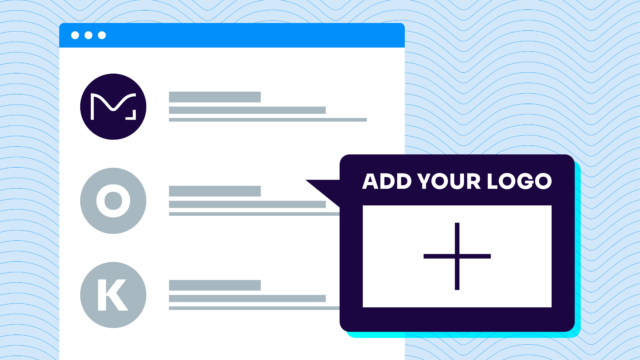
If you’re enforced, then put your logo in the inbox
BIMI (Brand Indicators for Message Identification) shows your verified logo next to your emails in supporting inboxes: Gmail, Yahoo, Apple Mail, and others. Instead of a gray circle with an initial, subscribers see your actual brand mark in the message list, before they open anything.
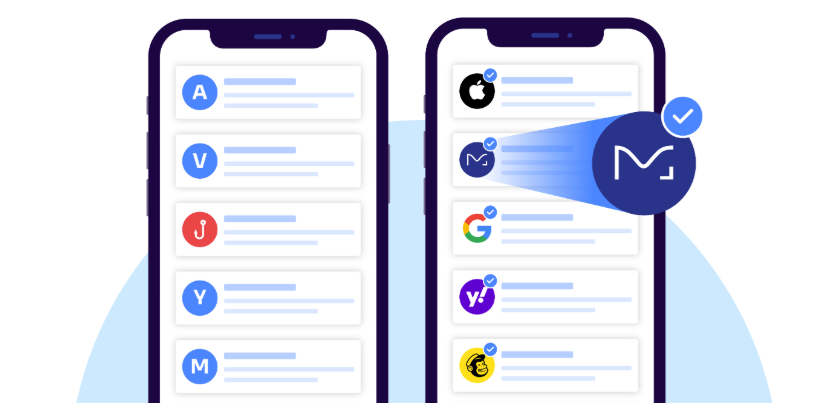
Yep, just like that. It’s a visual trust signal at the exact moment someone is deciding whether to open, and senders who deploy it typically report a meaningful lift in open rates. In a crowded Black Friday inbox, being the recognizable one has real ROI.
However, you’ll need two things first:
- It requires DMARC at enforcement. BIMI is built on top of authentication, and mailbox providers won’t display a logo for a domain that can’t prove its identity. That’s your case for pushing for DMARC enforcement.
- It usually needs a verified mark certificate. Most major inboxes require a VMC or CMC, which involves trademark verification and takes some lead time. Valimail Amplify handles the certificate process and the logo configuration.
Here’s what you need to do right now (or at least this week)
Don’t wait until Cyber Week rolls around. That’s too late. You need to get started on this as soon as possible:
- Check where you stand. Run your domain through Valimail’s free domain checker. Takes about five seconds and gives you your DMARC, SPF, and BIMI status. Bring the result to your IT conversation.
- Ask the question. “Are we at DMARC enforcement?” If yes, “what’s the policy set to?”
- Inventory your holiday senders. List every tool that will send email as your brand this season, including the seasonal ones. Your IT team needs this list, and you’re often the only person who has it.
- Get visibility running. Get a free Monitor account. It names every sender, no commitment. This is the step that makes everything else possible.
- Go after enforcement: Enforcement isn’t something you can reach by the end of the day, but give yourself a few weeks, and it’s definitely possible—especially if you use an automated service like Valimail Enforce.
The best Black Friday email is the one that arrives
Everything else in your holiday campaign is just optimization. Subject lines, send times, segmentation, discount structure—all of it matters, but all of it depends on delivery.
Authentication is the part that happens first and gets noticed least. It’s also the only item on your Q4 list that improves every campaign you send afterward, not just this one. Plus, it’s something you can do now, well before the holidays start.
Check your domain to see where you stand, then go have the conversation.
Frequently asked questions
Does DMARC affect email deliverability?
Yes. Mailbox providers including Gmail, Yahoo, and Microsoft check authentication before evaluating content, and they require it from bulk senders. Properly authenticated email gets more consistent inbox placement, while unauthenticated mail is more likely to be filtered, especially during high-volume periods like Black Friday and Cyber Monday when filtering tightens.
Can marketers set up DMARC, or is it an IT task?
The DNS changes are typically handled by IT or whoever manages your domain. Marketers own a critical piece of it though: The list of every platform that sends email on your brand’s behalf. That inventory is what authentication depends on, and marketing usually knows about tools IT has never heard of.
How long does DMARC take to set up?
Publishing a record takes minutes. Reaching enforcement (the policy level that provides actual protection) depends on how many sending services you have and whether the process is automated. Automated platforms average around 45 days. Manual approaches frequently take a year or more, which is why many organizations publish a record and never finish the job.
Will BIMI improve my open rates?
BIMI displays your verified logo beside your messages in supporting inboxes, and senders who deploy it generally report improved open rates. The logo acts as a recognition and trust cue at the moment someone decides whether to open. BIMI requires DMARC at enforcement first, plus a verified mark certificate in most major inboxes.